
Most crochet cardigan patterns are either too thin to wear outside or so bulky you can’t move your arms. This list gives you a waffle stitch oversized cardigan with drop shoulders, a hooded duster with a flowing silhouette, and 19 other designs built specifically for real fall weather — not just photo shoots.
These 21 crochet cardigan ideas for fall were built for three kinds of makers: the crocheter who wants a genuinely wearable layer for cold mornings, the intermediate maker ready to move beyond basic granny stitch into real garment shaping — cable texture, fair isle color work, leaf lace panels — and the gift-maker looking for a cardigan idea that doesn’t scream “homemade” the moment someone puts it on.
Every cardigan on this list names the exact stitch, hook size, and a real yarn weight and shade you can buy today. Scroll through all 21. Idea #20, the hooded duster, is the one our readers keep coming back to ask about.
1. Crochet Burnt Orange Waffle Stitch Oversized Cardigan with Drop Shoulders
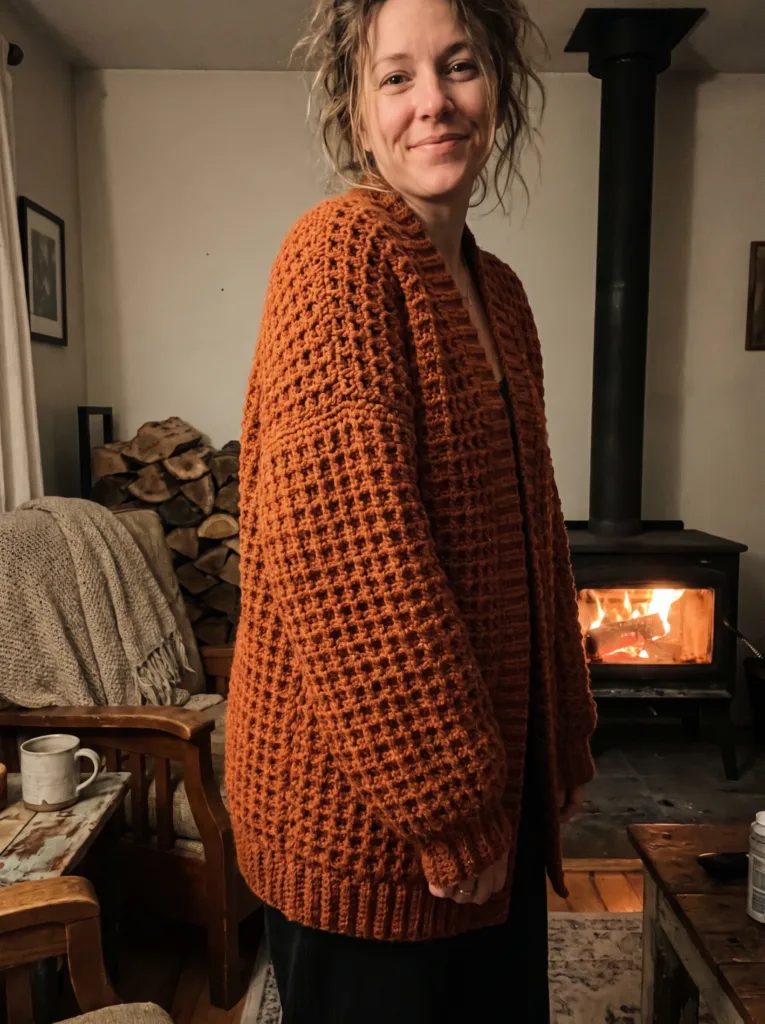
The drop shoulder seam is the entire reason this cardigan reads as “oversized chic” instead of “too big” — it’s a deliberate construction choice, not a fit mistake.
The Waffle Stitch Body
I worked the entire body in waffle stitch — alternating rows of front-post and back-post double crochet worked over a foundation row of dc — using burnt orange chunky weight wool-acrylic blend and a 6.5mm hook, which produces that deep, structured grid texture that genuinely traps warmth between the raised ridges. Waffle stitch is slower to work than plain double crochet, but the extra density is exactly why this cardigan functions as real outerwear rather than just a decorative layer.
The Drop Shoulder Construction
Instead of shaping a fitted armhole, I extended the shoulder line out by roughly 4 inches past the natural shoulder point on both the front and back panels before joining the sleeves, which is what creates that relaxed, oversized drape across the upper body. The sleeves themselves are worked straight with minimal tapering, since a drop shoulder cardigan looks best with sleeves that continue the loose, unstructured silhouette all the way to the cuff.
Yarn Suggestions to Recreate This Cardigan:
- Body and sleeves: Chunky weight wool-acrylic blend in burnt orange — Lion Brand Wool-Ease Thick & Quick in Pumpkin Pie, or Bernat Maker Home Dec in Rust
- Hook sizes: 6.5mm throughout
2. Crochet Maple Leaf Motif Button-Up Cardigan with Ribbed Cuffs
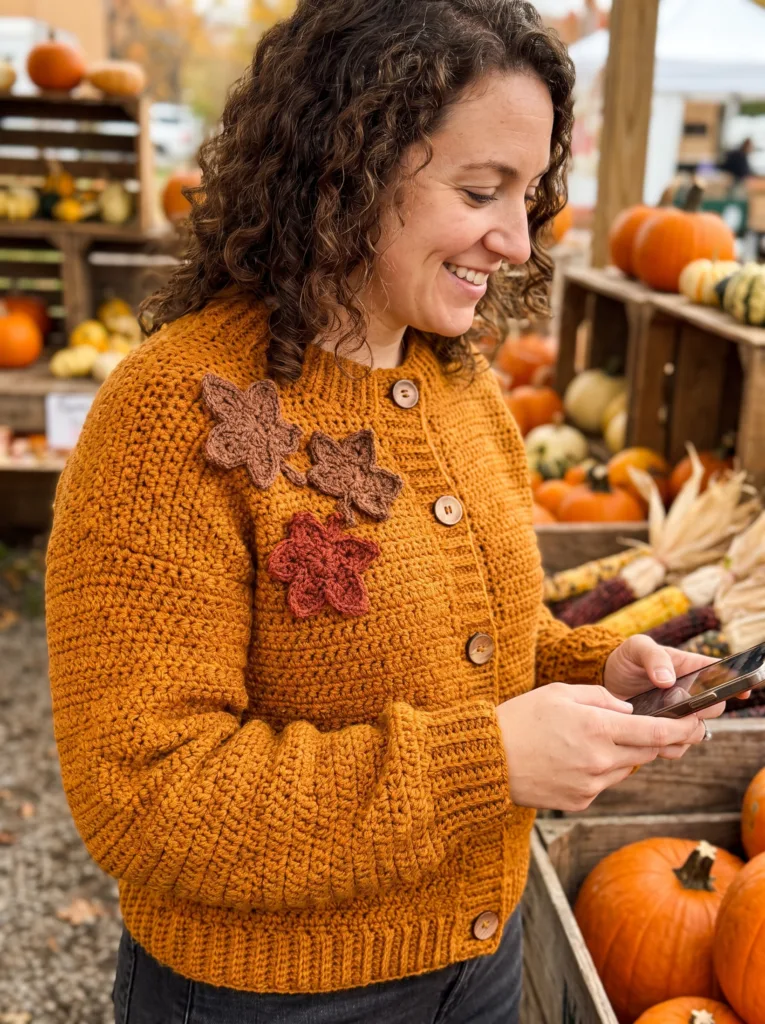
The maple leaves on this cardigan are worked as separate three-pointed motifs, then sewn on individually — which is what gives them their crisp, defined leaf shape instead of a blurred applique look.
The Body & Button Closure
The main body is worked in solid double crochet using deep amber worsted weight wool-acrylic and a 5mm hook, with a single row of buttonholes worked directly into the right front panel at 3-inch intervals and five wooden buttons sewn onto the left panel to match. I kept the body relatively fitted through the torso, since a button-up style needs enough structure to close cleanly without gaping.
The Maple Leaf Motifs & Ribbed Cuffs
Each maple leaf motif is crocheted flat using the classic five-pointed star-leaf shape, worked in rust red with brown vein detail added afterward in surface slip stitch, then sewn onto the left chest panel in a small overlapping cluster of three. The ribbed cuffs are worked separately in front-post and back-post double crochet alternating every stitch, then sewn onto the sleeve ends — this single detail is what makes the cuffs hug the wrist and keep cold air out, the same way a knit ribbed cuff would.
Yarn Suggestions to Recreate This Cardigan:
- Body: Worsted weight wool-acrylic in deep amber — Caron Simply Soft in Autumn Maize, or We Crochet Wool of the Andes in Cider
- Leaf motifs: Small amounts in rust red and brown — Lion Brand Heartland in Yellowstone (rust) and Redwood (brown)
- Hook sizes: 5mm for body, 4mm for leaf motifs and ribbed cuffs
3. Crochet Chunky Alpine Stitch Long Cardigan with Deep Pockets
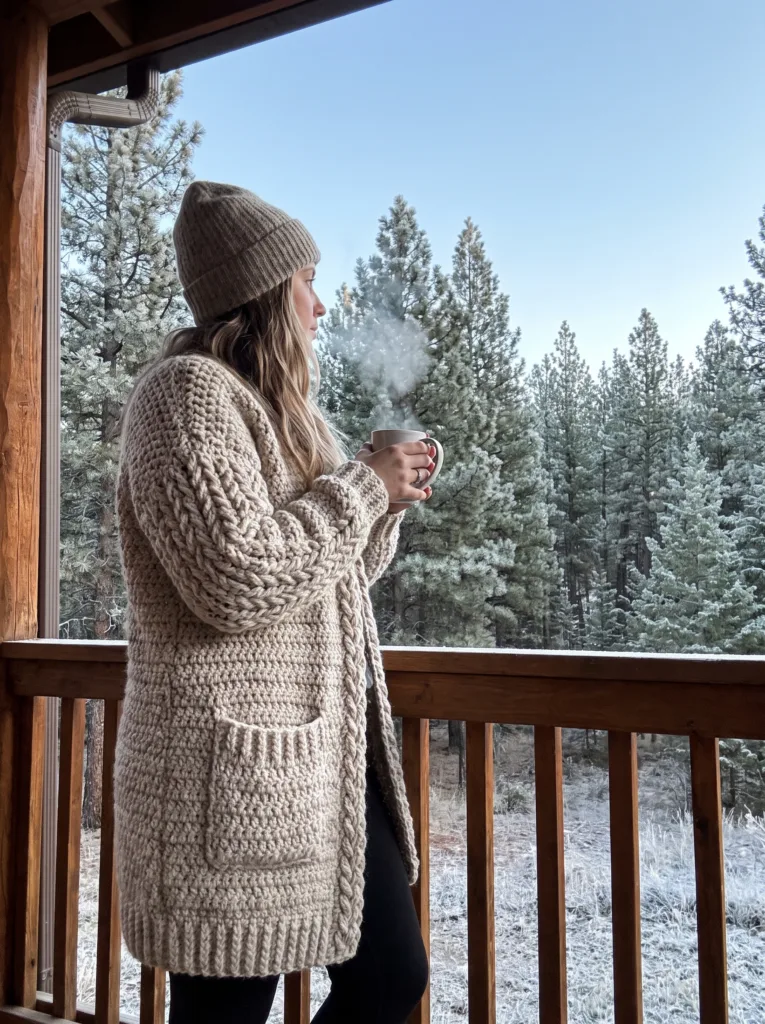
Alpine stitch creates a texture so dense and braided-looking that most people assume this cardigan is knitted, not crocheted, until they look closely at the stitch structure.
The Alpine Stitch Body
The entire body and sleeves are worked in alpine stitch — a combination of front-post treble crochet worked around the post of a stitch two rows below, creating a thick, twisted, braid-like texture — using oatmeal super chunky wool-acrylic blend and an 8mm hook. This stitch produces an exceptionally dense, warm fabric that genuinely behaves like a winter coat rather than a light layer, which is exactly the point of a long cardigan meant for real cold weather.
The Deep Pockets & Long Length
I worked the body long enough to fall at mid-thigh, then added two deep patch pockets at hip height — each pocket worked as a separate rectangle in the same alpine stitch and sewn onto the front panels with reinforced stitching along the top opening, since deep pockets see real daily use and need a sturdy attachment point. These pockets are sized generously enough to hold both hands or a phone comfortably, which matters far more than most pattern designers account for.
Yarn Suggestions to Recreate This Cardigan:
- Body and pockets: Super chunky wool-acrylic blend in oatmeal — Lion Brand Wool-Ease Thick & Quick in Oatmeal, or Bernat Blanket in Vintage White
- Hook sizes: 8mm throughout
4. Crochet Hooded Cardigan with Braided Cable Texture and Toggle Closure
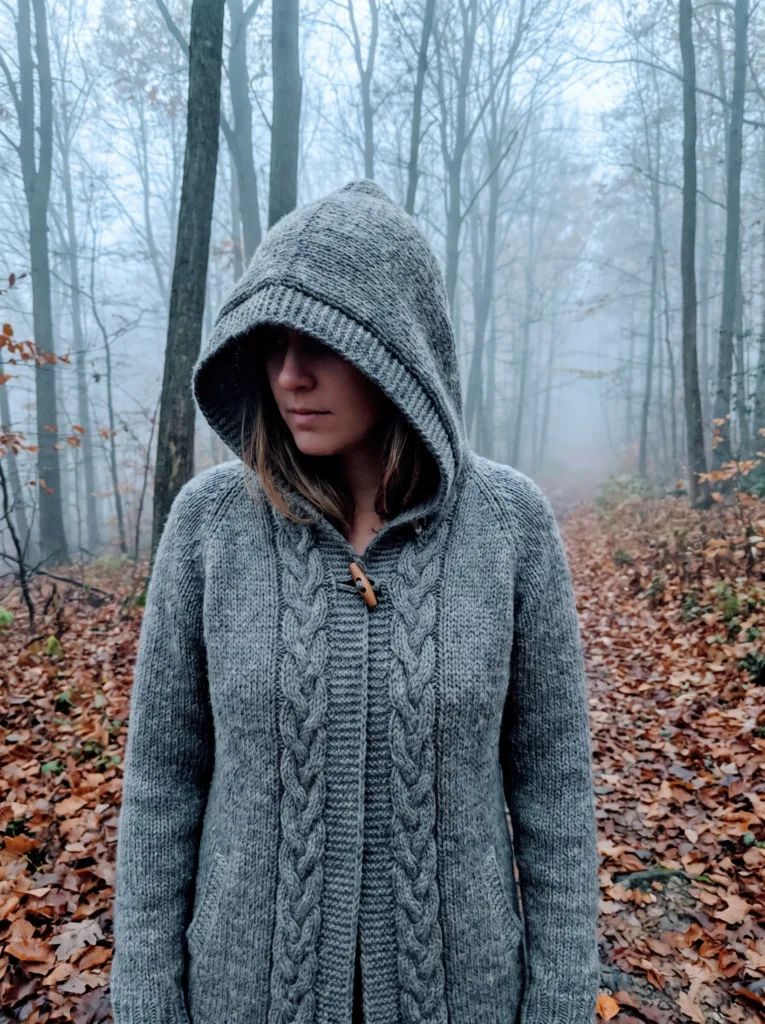
The cable texture here isn’t knit at all — it’s created using crossed front-post treble stitches that mimic a traditional knit cable, worked entirely with a crochet hook.
The Braided Cable Front Panels
The front panels feature a vertical cable column worked by crossing two sets of front-post treble crochet stitches over each other every fourth row — the right-hand group crosses in front of the left, then alternates — using heather grey worsted weight wool blend and a 5.5mm hook. This crossing technique is genuinely fiddly the first few times, but the resulting braided rope effect running up both sides of the front closure is what makes this cardigan look knitted by someone with serious technical skill.
The Hood & Toggle Closure
The hood is worked as a simple folded rectangle attached around the neckline opening, with a slightly pointed top shaping achieved through gradual decreases at the crown — generous enough to pull up over the head comfortably without feeling restrictive. The toggle closure is a single wooden toggle button sewn at chest height, paired with a crocheted loop on the opposite side, which gives a more rustic, outdoorsy closure than a standard button.
Yarn Suggestions to Recreate This Cardigan:
- Body, hood, and cables: Worsted weight wool blend in heather grey — Drops Air in Grey, or We Crochet Wool of the Andes in Vapor Heather
- Hook sizes: 5.5mm throughout
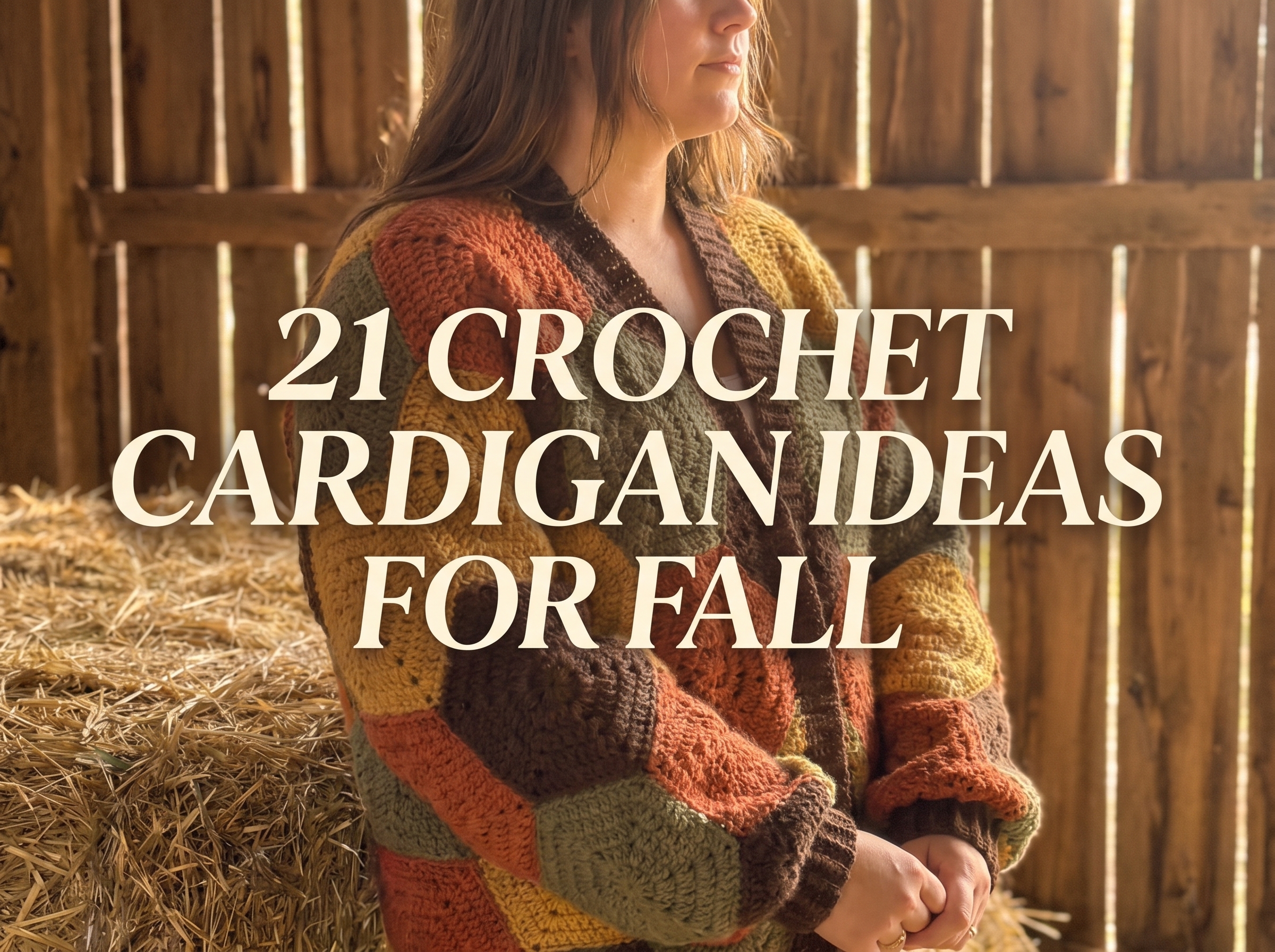
5. Crochet Patchwork Hexagon Cardigan in Earthy Autumn Tones
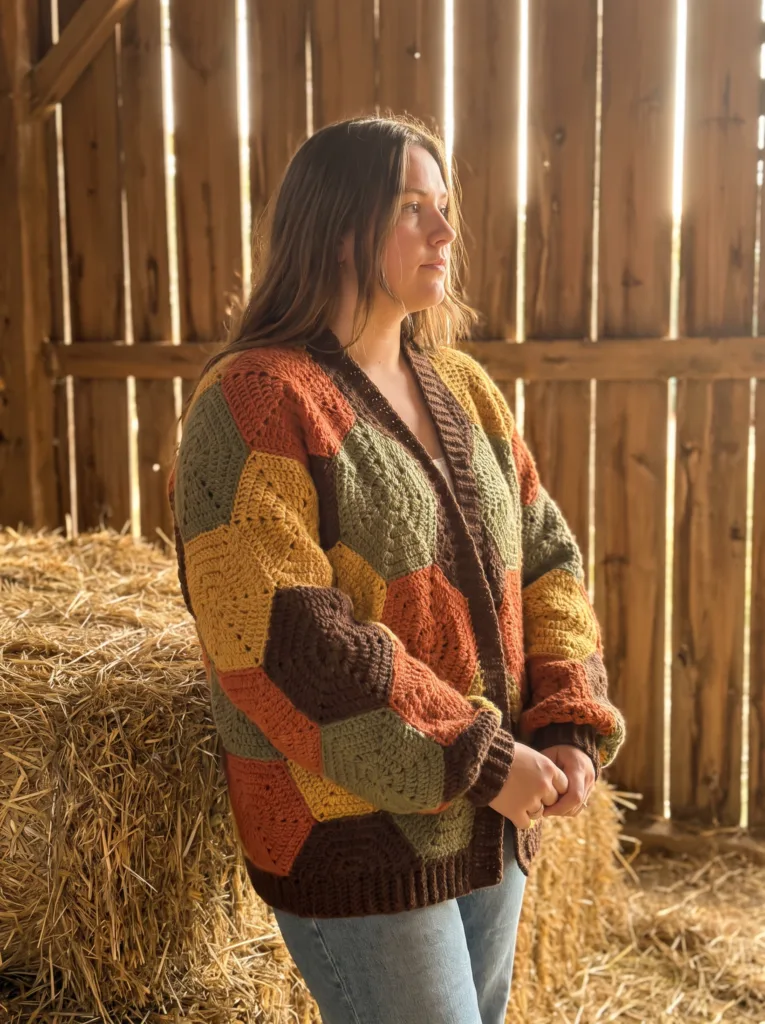
This entire cardigan is built from individually crocheted hexagon motifs joined together — there is no continuous panel anywhere in this garment.
The Hexagon Motifs
Each hexagon is worked in the round using a standard six-sided granny hexagon pattern, with colors randomly assigned from a palette of burnt orange, olive, mustard, and chocolate brown across the 64 motifs needed for this cardigan, using DK weight wool-acrylic and a 4.5mm hook. Working in DK weight rather than chunky keeps each individual hexagon a manageable size, since this many color changes would become unwieldy at a larger gauge.
The Joining & Shaping
I joined the hexagons using a flat slip-stitch seam, arranging the color distribution so no two identical colors sit directly adjacent to each other anywhere on the garment — this random-but-controlled placement is what keeps the patchwork looking intentional rather than chaotic. The armholes and front opening shaping is achieved simply by which hexagons are included or omitted from the join pattern, rather than any separate decrease rows, since hexagon garments are shaped through motif placement rather than traditional increases and decreases.
Yarn Suggestions to Recreate This Cardigan:
- Hexagon motifs: DK weight wool-acrylic in burnt orange, olive, mustard, and chocolate brown — Paintbox Yarns Wool Mix Aran in Pumpkin Orange, Forest Green, Mustard Yellow, and Chocolate Brown
- Hook sizes: 4.5mm throughout
Five ideas in — but idea #20, the hooded duster cardigan, is the one our readers keep coming back to ask about. Keep scrolling.
6. Crochet Moss Stitch Cropped Cardigan with Balloon Sleeves
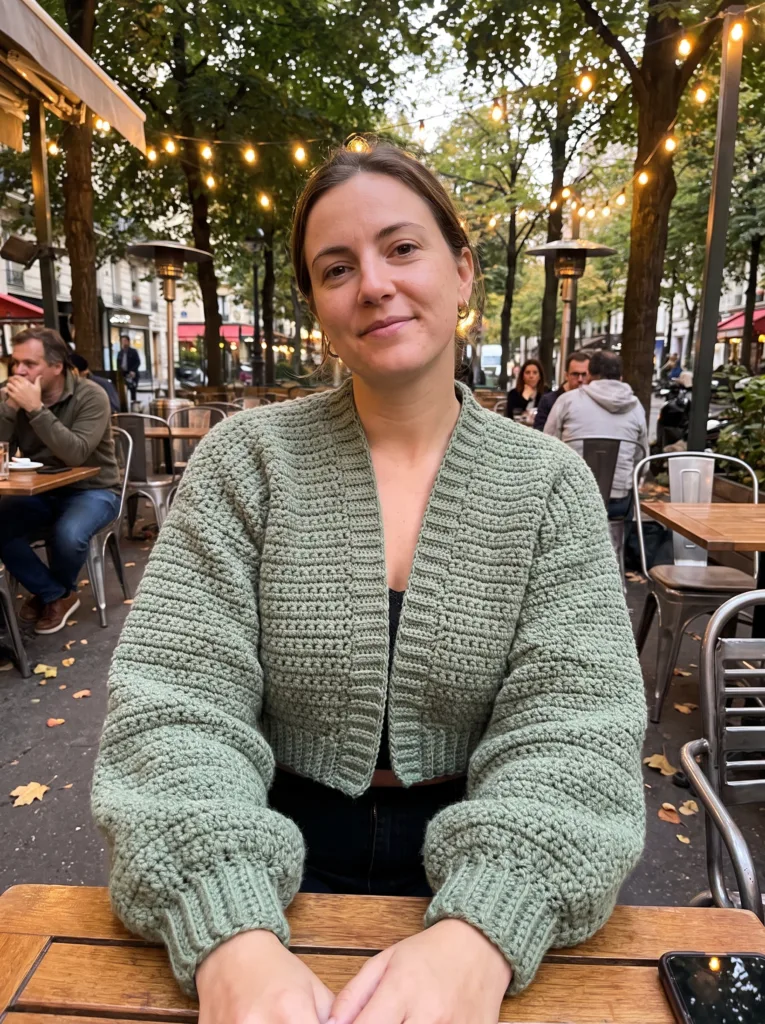
The balloon sleeves are the genuinely tricky part of this cardigan — they require deliberately excessive stitch counts that get gathered back in at the wrist rather than simply tapering.
The Moss Stitch Body
The cropped body is worked in moss stitch — alternating single crochet and chain-1 spaces, offset every row to create a subtly textured, slightly bumpy fabric — using sage green DK weight cotton-wool blend and a 4mm hook. I kept the body length short, hitting right at the natural waist, since this cropped silhouette is specifically designed to be styled over high-waisted bottoms.
The Balloon Sleeves
Each sleeve is worked with significant extra width through the upper arm — roughly double the stitch count of a standard fitted sleeve — then gathered back down to a snug fit at the wrist using a sharp decrease row over just 4 rounds, which creates that dramatic poufed volume up top with a clean, controlled cuff. This gather happens quickly and sharply rather than gradually, which is the specific technique that creates genuine balloon shape rather than just a loose, baggy sleeve.
Yarn Suggestions to Recreate This Cropped Cardigan:
- Body and sleeves: DK weight cotton-wool blend in sage green — Paintbox Yarns Wool Mix DK in Sage Green, or Drops Nepal in Sage
- Hook sizes: 4mm throughout
7. Crochet Acorn Motif Cardigan with Textured Bobble Accents
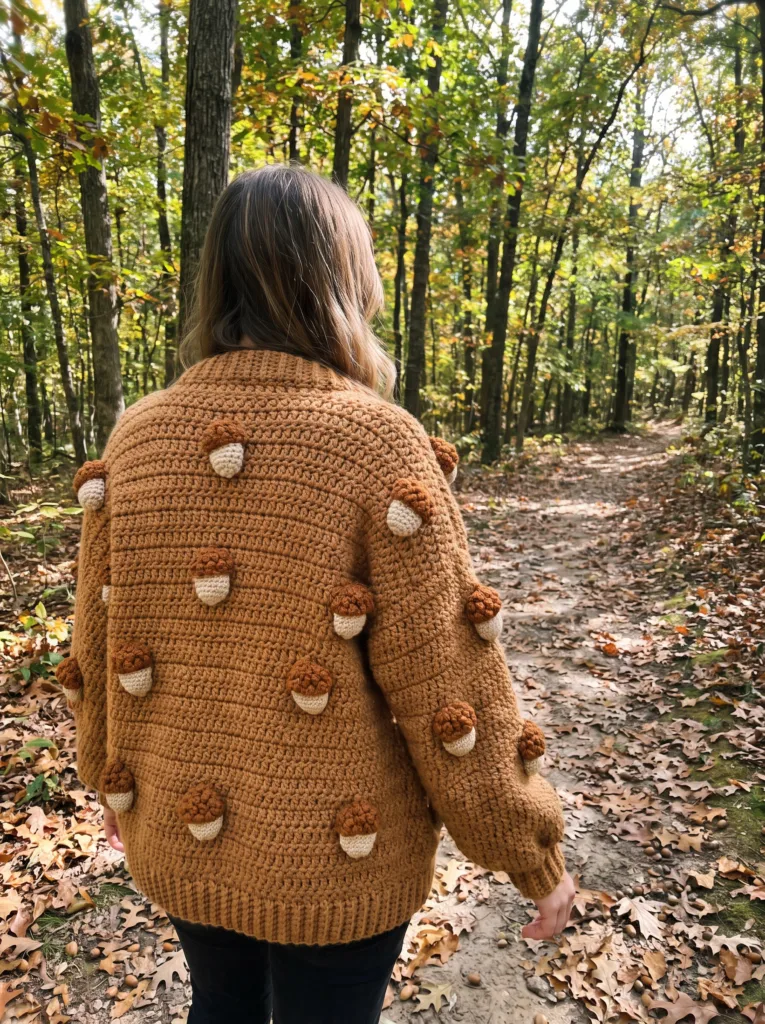
Each acorn cap on this cardigan is a genuine bobble stitch worked directly into the motif — not embroidered or sewn separately — which gives it real dimensional texture you can actually feel.
The Body & Acorn Motif Construction
The body is worked in solid double crochet using caramel brown worsted weight wool-acrylic and a 5mm hook, kept relatively simple and unembellished so the acorn motifs have room to stand out as the clear visual feature. Each acorn motif starts with a cream oval base worked flat in a few rounds of single crochet, then I added 4-5 bobble stitches in brown clustered at the top of the oval to form the acorn cap, exactly the way bobble stitch is used to create raised texture in traditional Aran-style designs.
The Scattered Placement
I made twelve acorn motifs total and scattered them across both front panels in a loosely diagonal arrangement, mimicking how acorns naturally fall and cluster on the ground rather than placing them in a rigid grid. Each motif is sewn on individually with matching sewing thread, and the raised bobble caps genuinely catch light differently than the flat oval base, which is what gives this scattered motif arrangement real dimensional depth rather than reading as a flat printed pattern.
Yarn Suggestions to Recreate This Cardigan:
- Body: Worsted weight wool-acrylic in caramel brown — We Crochet Wool of the Andes in Cider, or Lion Brand Heartland in Yellowstone
- Acorn motifs: Small amounts in brown and cream — Caron Simply Soft in Chocolate and Off White
- Hook sizes: 5mm for body, 3.5mm for acorn motifs
8. Crochet Belted Wrap Cardigan with Dense Thermal Stitch Texture
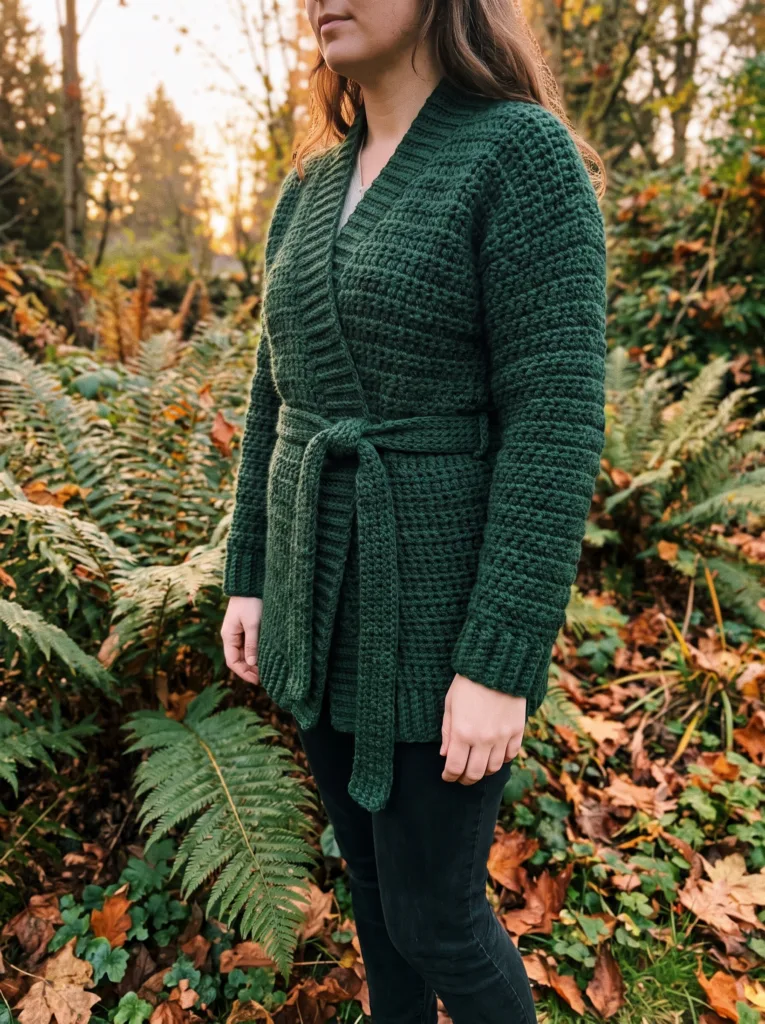
Thermal stitch is the real workhorse of this cardigan — it’s a double-thickness fabric created through a specific stitch combination, and it’s genuinely warmer than a single layer of standard double crochet at the same yarn weight.
The Thermal Stitch Body
The wrap-style body is worked in thermal stitch — a combination of front-loop single crochet and back-loop single crochet alternated to create two distinct fabric layers fused at the stitch base — using deep forest green worsted weight wool-acrylic and a 5mm hook. This stitch technique essentially traps a layer of air between the two fabric faces, which is the actual mechanism that makes thermal stitch genuinely warmer rather than just visually thicker.
The Wrap Front & Matching Belt
The two front panels are worked as extended pieces designed to cross over each other and wrap around to the side, where they’re secured by a separately crocheted belt threaded through two waist loops and tied in a simple knot. I worked the belt as a long, narrow strip in the same thermal stitch as the body, finished with simple fringed ends rather than a buckle, which keeps the closure adjustable for layering over different thicknesses of clothing underneath.
Yarn Suggestions to Recreate This Wrap Cardigan:
- Body and belt: Worsted weight wool-acrylic in deep forest green — Caron Simply Soft in Dark Sage, or Red Heart With Love in Hunter Green
- Hook sizes: 5mm throughout
9. Crochet Gradient Rust-to-Brown Longline Cardigan with Open Front
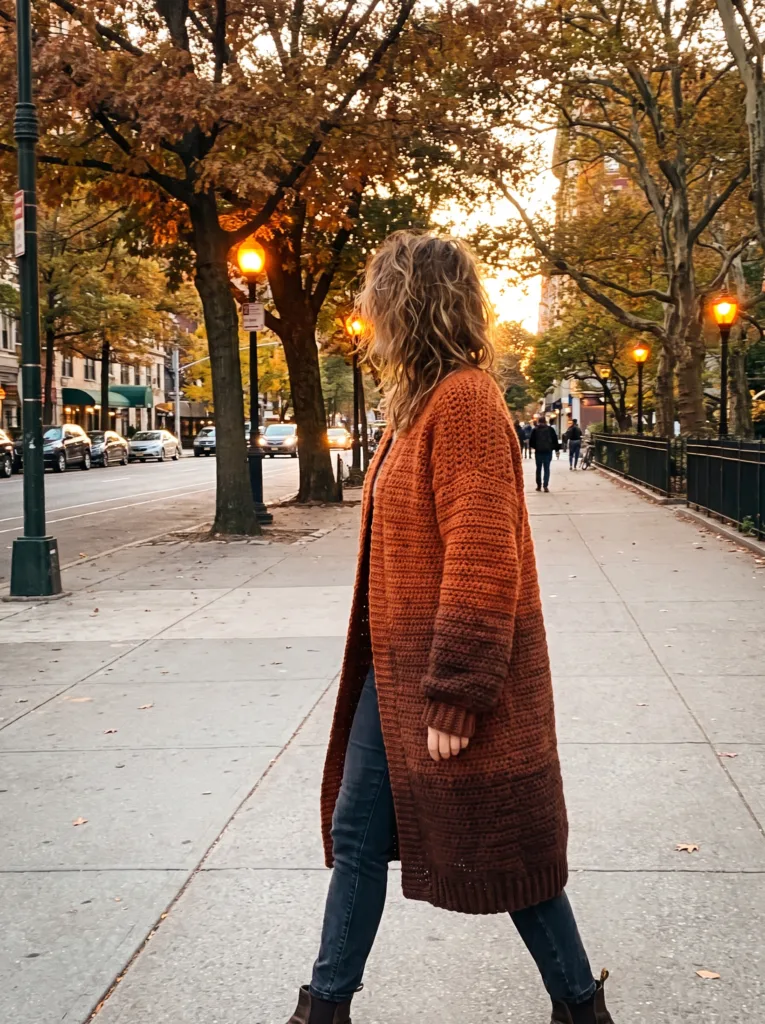
The gradient on this cardigan is built deliberately over five color transitions, not achieved with a single variegated skein, which is what gives it such a smooth, intentional fade from top to bottom.
The Open Front Construction
This longline cardigan is worked as one continuous piece with no front closure at all — no buttons, no ties, no belt — designed specifically to be worn open and layered over an outfit, using worsted weight wool-acrylic and a 5mm hook throughout. The body falls well past the knee, and I kept the silhouette deliberately simple and unshaped, since the gradient color work is doing all the visual work here without needing additional structural details to compete with it.
The Five-Shade Gradient
I worked the gradient using five shades in sequence — rust orange, burnt orange, terracotta, cinnamon, and deep chocolate brown — blending each transition over 6-row sections by carrying the previous color for one row into the new section and alternating stitches between the two, rather than switching abruptly at a single row. This gradual blending technique, the same one used in the ombre beach dress from a previous list, is what prevents the gradient from reading as distinct horizontal stripes and instead creates that genuine sunset-like fade running the full length of the cardigan.
Yarn Suggestions to Recreate This Longline Cardigan:
- Gradient shades: Worsted weight wool-acrylic in rust orange, burnt orange, terracotta, cinnamon, and chocolate brown — Lion Brand Heartland in Yellowstone, Denali, Acadia, Sequoia, and Redwood
- Hook sizes: 5mm throughout
10. Crochet Fair Isle Style Cardigan with Geometric Fall Pattern
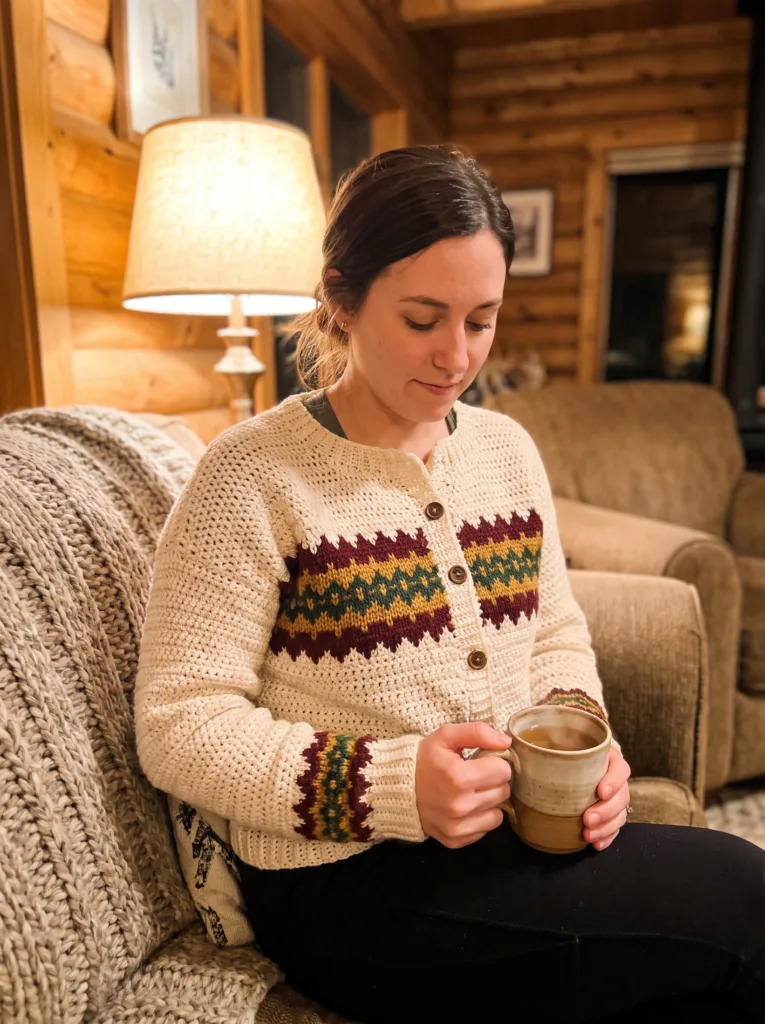
This is tapestry crochet doing the work that’s traditionally associated with stranded knitting — carrying multiple colors across a row to build a charted geometric pattern.
The Cream Base Body
The main body is worked in solid double crochet using cream worsted weight wool blend and a 5mm hook, kept plain above and below the patterned band so the colorwork section has a clear, uncluttered field to stand out against. I worked the body with a relatively fitted silhouette, since fair isle style patterning traditionally appears on more structured, classic garment shapes rather than oversized or slouchy ones.
The Fair Isle Colorwork Band
The patterned band across the chest and at both cuffs is worked in tapestry crochet, carrying burgundy, mustard, and forest green yarn across each row according to a small charted geometric motif — repeated diamonds and small crosses, the traditional fair isle vocabulary — while crocheting over the unused color strands to keep the back of the work tidy. Working this band in tapestry crochet rather than intarsia means every row is worked in a single color pass with the others carried along, which produces a slightly thicker, sturdier fabric exactly where the design needs the most visual structure.
Yarn Suggestions to Recreate This Cardigan:
- Base body: Worsted weight wool blend in cream — Drops Air in Off White, or We Crochet Wool of the Andes in Vanilla
- Colorwork band: Small amounts in burgundy, mustard, and forest green — Paintbox Yarns Wool Mix Aran in Garnet Red, Mustard Yellow, and Forest Green
- Hook sizes: 5mm throughout
11. Crochet High Collar Cardigan with Knit-Look Ribbing Effect
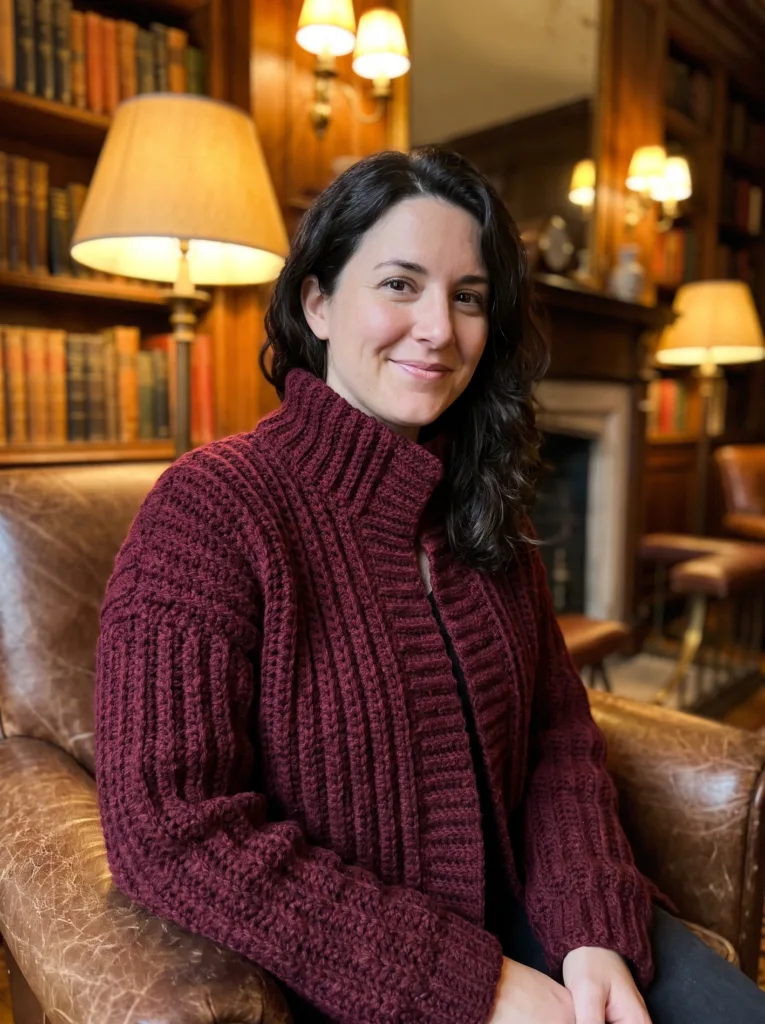
This is the cardigan that consistently fools people into thinking it’s machine-knit — the ribbing effect is dense and uniform enough that the crochet origin only becomes obvious up close.
The Knit-Look Ribbing Body
The entire body is worked in alternating front-post and back-post double crochet, every single stitch, rather than the more common technique of only ribbing at the edges — using deep burgundy worsted weight wool blend and a 4.5mm hook. Working this ribbing pattern across the full body, not just as a border, is what creates that continuous vertical line texture that reads as genuinely knitted fabric from even a short distance away, since post-stitch ribbing has a much tighter, more uniform rib than basic single crochet.
The High Standing Collar
The collar is worked separately as a tall rectangular band in the same post-stitch ribbing, sized to stand upright around the neck rather than fold over, then attached around the neckline opening with the ribbing running vertically to match the body. This standing collar height — reaching roughly mid-neck — provides genuine wind protection that a standard folded collar doesn’t offer, which is a meaningful practical upgrade for a cardigan meant for actual cold-weather wear.
Yarn Suggestions to Recreate This Cardigan:
- Body and collar: Worsted weight wool blend in deep burgundy — Drops Nepal in Wine Red, or We Crochet Wool of the Andes in Sangria
- Hook sizes: 4.5mm throughout
12. Crochet Cocoon Cardigan with Soft Brushed Yarn Texture
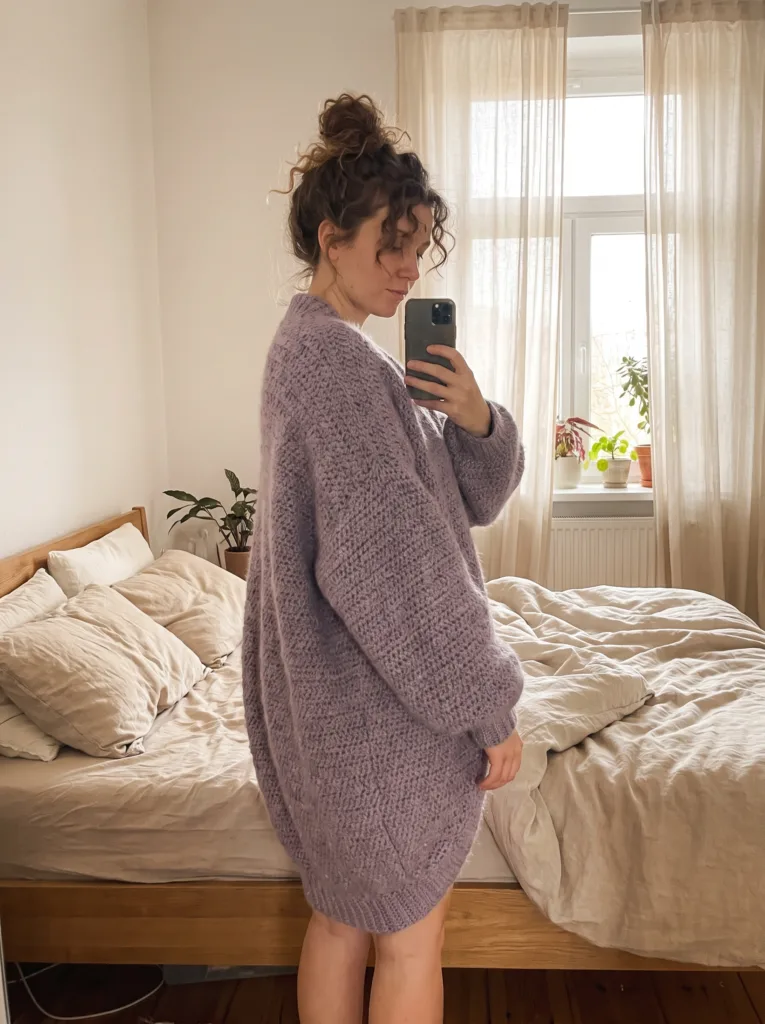
The cocoon shape here comes entirely from where the increases and decreases are placed — wide through the body, narrowing sharply at the hem — rather than from any seaming or darting after the fact.
The Cocoon Silhouette Shaping
The body is worked in solid double crochet using dusty lavender brushed worsted weight yarn and a 5mm hook, with deliberate increases built into the side seams from the underarm down to the widest point at the hip, then a sharp series of decreases over the final 8 rows to pull the hem back in narrower than the widest point. This wide-then-narrow shaping is the entire mechanism behind the cocoon silhouette, and it requires charting the increases and decreases carefully in advance, since getting the proportions wrong makes the shape look more like a poorly fitted poncho than an intentional cocoon.
The Brushed Yarn Texture
I used a brushed acrylic-mohair blend yarn for this entire project, which has a naturally fuzzy halo that softens the visible stitch definition and gives the finished cardigan a soft, slightly hazy texture rather than crisp, defined crochet stitches. This brushed texture is also what makes the cocoon shape feel soft and huggable rather than structured, which fits the relaxed, wrap-yourself-up mood this particular silhouette is going for.
Yarn Suggestions to Recreate This Cocoon Cardigan:
- Body: Brushed acrylic-mohair blend in dusty lavender — Red Heart Hygge in Lilac, or Lion Brand Vanna’s Choice in Dusty Purple held with a strand of brushed mohair-style yarn
- Hook sizes: 5mm throughout
13. Crochet Leaf Lace Panel Cardigan with Fitted Silhouette
Idea #13 — and the next eight cardigans bring some of the most dramatic silhouettes on this entire list, including the hooded duster everyone keeps asking about.
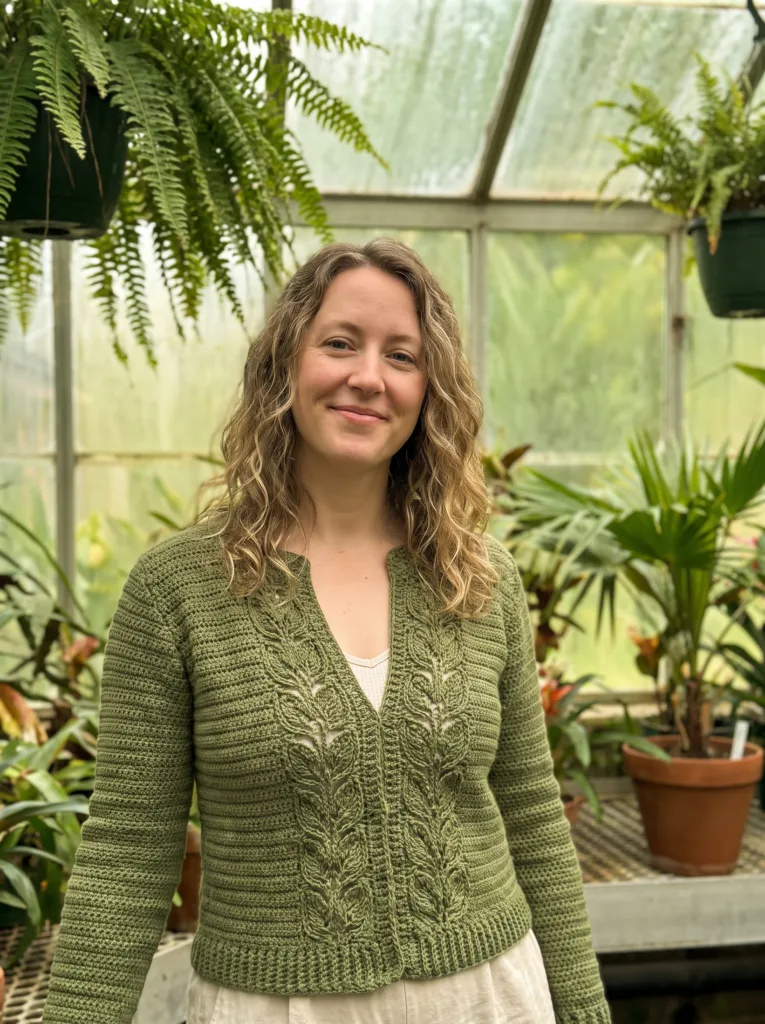
The leaf lace panels are worked as a charted openwork pattern running vertically down the front — a genuine lace technique, not a printed or appliqued leaf motif.
The Fitted Body
The main body is worked in solid double crochet using moss green DK weight wool-cotton blend and a 4mm hook, shaped closely through the waist with princess-style seaming for a fitted, tailored silhouette that contrasts with the looser, more relaxed cardigans elsewhere on this list. This fitted base is intentional — leaf lace panels read most clearly against a structured, well-defined silhouette rather than getting lost in a loose, oversized shape.
The Leaf Lace Panels
Each leaf lace panel is worked from a charted pattern combining chain spaces, double crochet clusters, and treble crochet to form a repeating leaf-vein motif, worked as a vertical strip down the center of each front panel from shoulder to hem. The openwork lace contrasts directly against the solid double crochet surrounding it, and I deliberately kept the panels narrow — about 3 inches wide — so the lace reads as an elegant accent detail rather than overwhelming the fitted silhouette of the rest of the garment.
Yarn Suggestions to Recreate This Fitted Cardigan:
- Body and lace panels: DK weight wool-cotton blend in moss green — Drops Nepal in Moss Green, or Paintbox Yarns Wool Mix DK in Forest Green
- Hook sizes: 4mm throughout
14. Crochet Buttonless Draped Cardigan with Waterfall Front
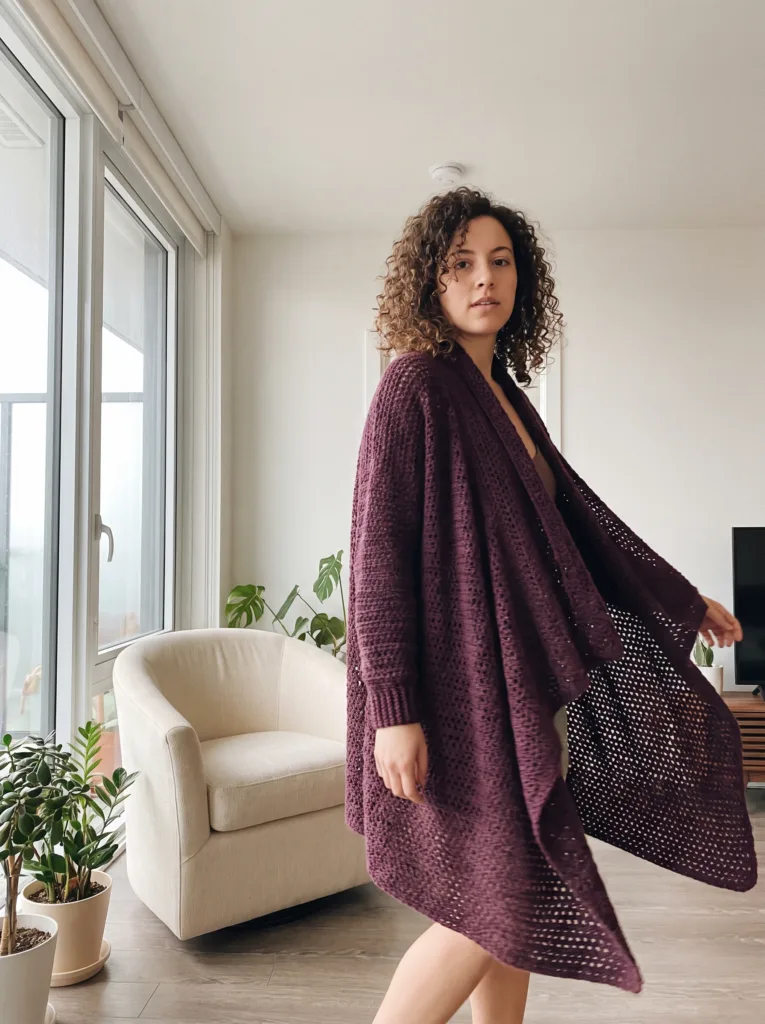
The waterfall drape here is achieved through bias-cut construction — the fabric is worked at an angle to the body rather than straight up and down, which is what allows it to fold and cascade rather than hang flat.
The Bias-Worked Front Panels
The two front panels are worked on the diagonal, starting from a point at the shoulder and increasing steadily along one edge while the other edge stays straight, using deep plum lightweight worsted wool-acrylic blend and a 4.5mm hook. This diagonal construction is the entire secret behind the waterfall effect — fabric worked on the bias has a completely different drape quality than fabric worked straight, falling in soft folds rather than hanging in a flat, static line.
The Buttonless Closure
There is no closure mechanism on this cardigan at all — no buttons, no ties, no belt — the front panels are simply cut long and wide enough to overlap naturally and stay in place through their own weight and drape when worn open or loosely crossed. This is a deliberately different approach from the belted wrap cardigan earlier in this list; here the absence of any closure is the actual design feature, relying entirely on the bias drape to create movement and shape.
Yarn Suggestions to Recreate This Draped Cardigan:
- Body: Lightweight worsted wool-acrylic blend in deep plum — Drops Air in Plum, or Caron Simply Soft in Plum Perfect
- Hook sizes: 4.5mm throughout
15. Crochet Colorblock Cardigan in Mustard, Olive, and Cream Tones
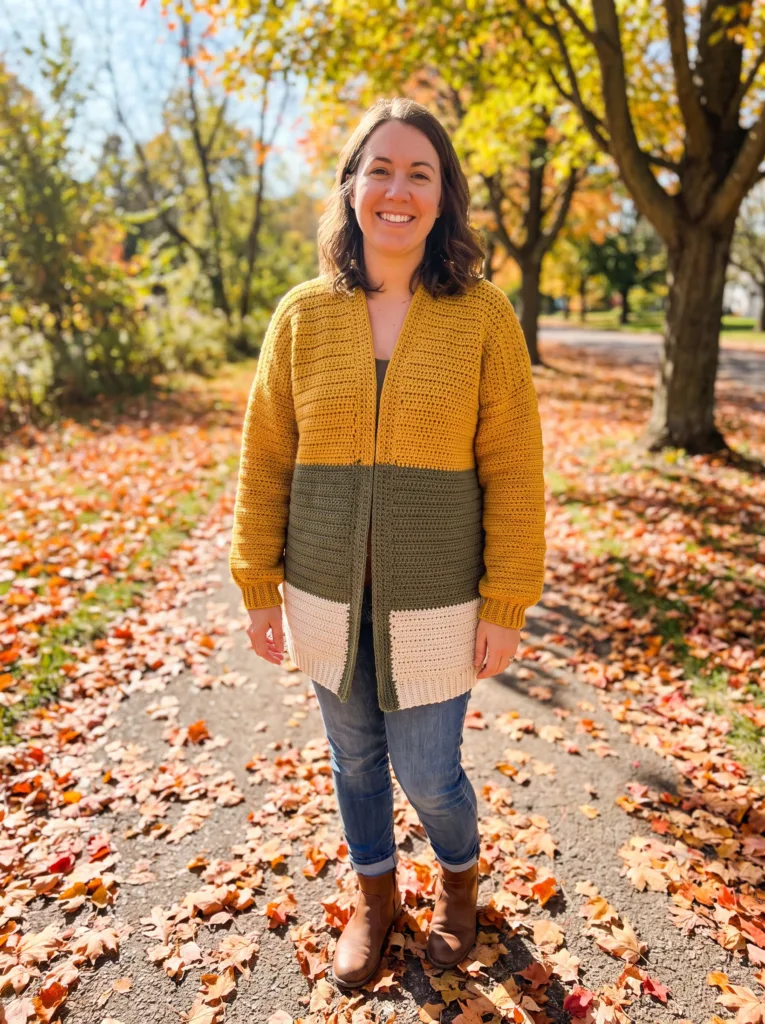
This is the cardigan version of the vertical colorblock dress from a previous list — but worked in horizontal bands rather than vertical panels, which creates an entirely different visual rhythm.
The Three Horizontal Color Sections
The body is worked top-down in one continuous piece, starting with mustard yellow at the shoulders for the first third, transitioning to olive green through the torso, and finishing in cream from the waist to the hem, using worsted weight wool-acrylic and a 5mm hook throughout. I worked each color change as a sharp single-row switch rather than a gradual blend, since the bold graphic effect of clean color division is the entire visual point of this design, unlike the gradient cardigan elsewhere on this list.
The Sleeve Color Coordination
The sleeves echo the same three-color sequence as the body, with mustard at the shoulder seam transitioning through olive to a cream cuff, which keeps the colorblocking feeling intentional and coordinated across the whole garment rather than confined to the torso alone. This matching sleeve treatment is a small detail that significantly affects how finished and considered the final piece looks, since mismatched sleeve coloring is one of the most common ways colorblock garments end up looking unplanned.
Yarn Suggestions to Recreate This Colorblock Cardigan:
- Section 1: Worsted wool-acrylic in mustard yellow — We Crochet Wool of the Andes in Honey
- Section 2: Worsted wool-acrylic in olive green — Lion Brand Heartland in Great Smoky
- Section 3: Worsted wool-acrylic in cream — Caron Simply Soft in Off White
- Hook sizes: 5mm throughout
16. Crochet Tunisian Knit Stitch Structured Cardigan with Clean Edges
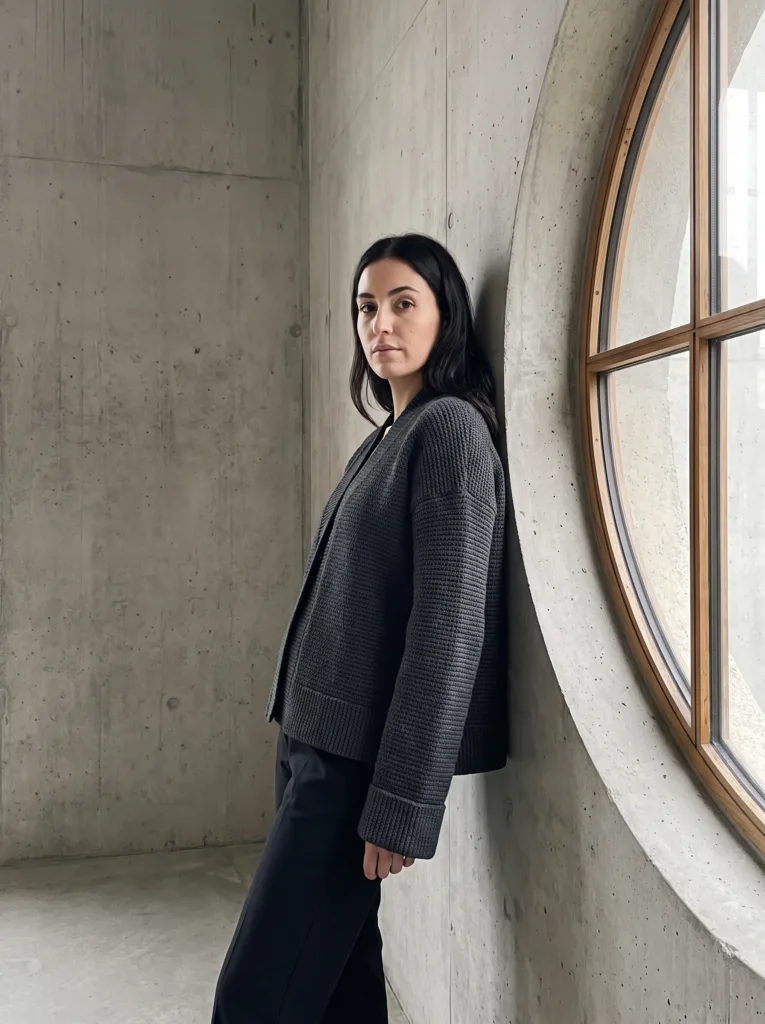
The Tunisian knit stitch is what makes this cardigan possible to wear as genuine tailored outerwear rather than something that reads as obviously hand-crafted casualwear.
The Tunisian Knit Stitch Body
The entire body is worked using a long Tunisian crochet hook in Tunisian knit stitch, which produces an exceptionally dense, smooth fabric with a strong vertical grain that closely resembles machine-knit jersey — using charcoal grey worsted weight wool blend and a 6mm Tunisian hook. This technique requires working in forward and return passes rather than standard crochet rows, and the resulting fabric has almost no stretch and excellent stitch definition, which is exactly the structured, tailored quality this design is going for.
The Clean Tailored Edges
Every edge on this cardigan — the front opening, the hem, and the cuffs — is finished with a single firm row of standard single crochet worked through both loops, which stabilizes the Tunisian fabric’s tendency to curl and creates the crisp, architectural edge lines visible in the finished piece. This clean edge finishing is a small but critical technical step; skipping it is the most common reason Tunisian crochet garments end up looking unfinished rather than genuinely tailored.
Yarn Suggestions to Recreate This Structured Cardigan:
- Body: Worsted weight wool blend in charcoal grey — We Crochet Wool of the Andes in Charcoal Heather, or Drops Nepal in Dark Grey
- Hook sizes: 6mm Tunisian hook for body, 5mm standard hook for edge finishing
17. Crochet Fringe Hem Boho Cardigan with Relaxed Fit
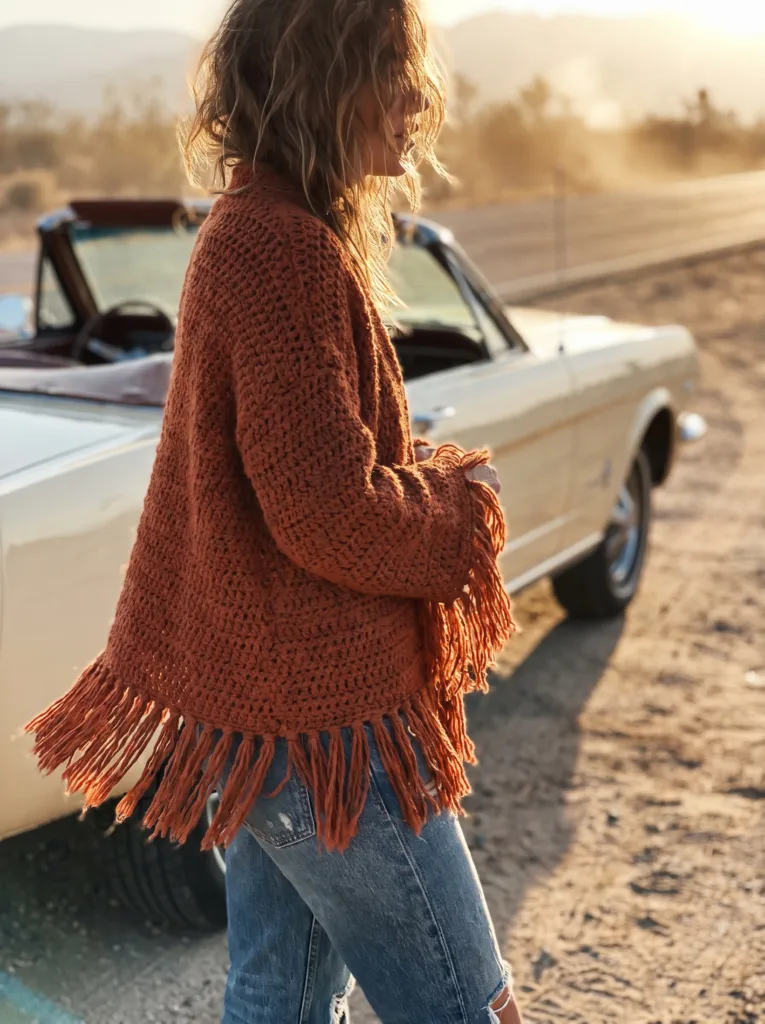
This is the cardigan counterpart to the boho fringe dress from a previous list, but here the fringe appears in two places — hem and cuffs — rather than just one, doubling the swing and movement.
The Relaxed Boho Silhouette
The body is worked in solid double crochet using terracotta worsted weight wool-acrylic and a 5.5mm hook, with deliberately generous ease throughout the body and dropped shoulder seams that continue the same loose, unstructured feeling through the sleeves. I kept the front entirely open with no closure, letting the relaxed silhouette and the fringe detail carry the entire visual identity of the piece without any competing structural elements.
The Double Fringe Detail
The fringe at both the hem and the sleeve cuffs is created the same way — cutting 6-inch lengths of the terracotta yarn and pulling a folded loop through every stitch along the final round, then trimming all ends to an even length once secured. Working dense fringe into both the hem and the cuffs, rather than just one location, means the fringe moves and sways from two points simultaneously as you walk or move your arms, which is the detail that makes this cardigan feel genuinely boho rather than just having a single decorative trim element.
Yarn Suggestions to Recreate This Boho Cardigan:
- Body and fringe: Worsted weight wool-acrylic in terracotta — We Crochet Wool of the Andes in Cider, or Lion Brand Heartland in Yellowstone
- Hook sizes: 5.5mm throughout
18. Crochet Double-Breasted Cardigan with Chunky Textured Stitch
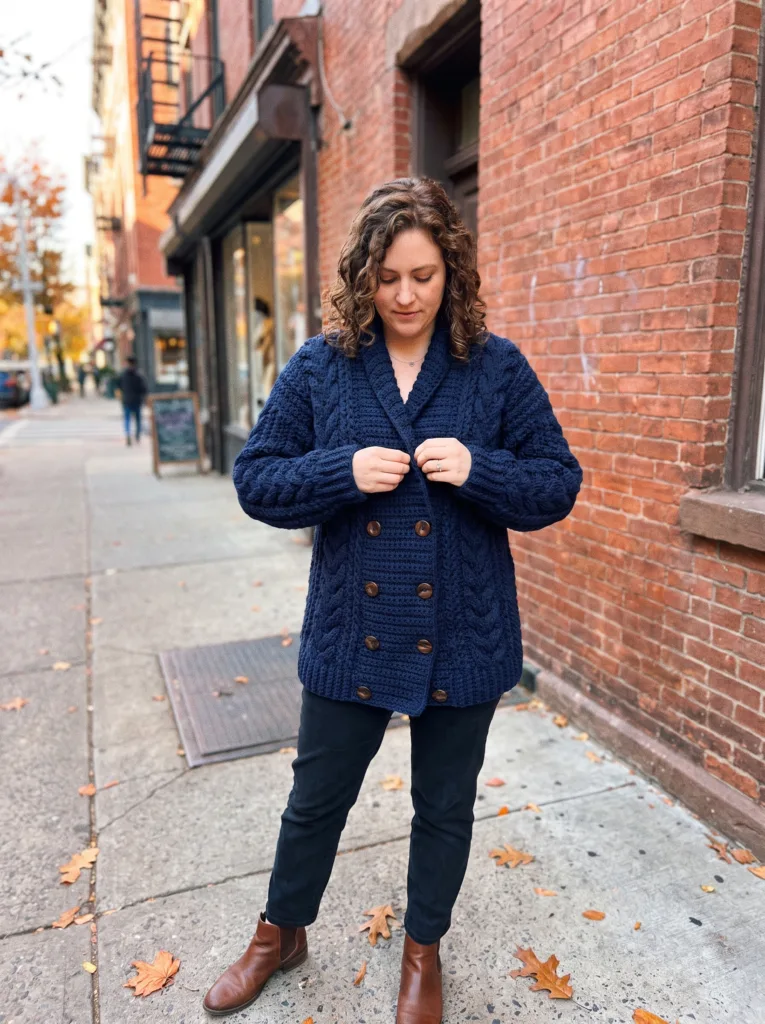
The double-breasted closure is what gives this cardigan its distinctly menswear-inspired, tailored-coat silhouette rather than reading as a typical soft cardigan shape.
The Chunky Textured Body
The body is worked in a dense cluster stitch — combining bobble and post stitches in a regular repeat to create substantial surface texture — using deep navy chunky weight wool-acrylic and a 6.5mm hook, which gives the entire garment enough visual weight and structure to support the formal double-breasted styling. This chunky texture is intentionally substantial; a lighter, smoother stitch pattern wouldn’t carry the structured, coat-like presence this silhouette is aiming for.
The Double-Breasted Button Closure
The front panels overlap significantly more than a standard single-breasted cardigan, with two parallel vertical rows of large buttons — six total — positioned for a genuine cross-over closure rather than a decorative second row. I worked sturdy reinforced buttonholes into the inner overlap panel and sewed the buttons through both layers where they cross, since a double-breasted closure puts more structural stress on the button attachment points than a standard single closure does.
Yarn Suggestions to Recreate This Double-Breasted Cardigan:
- Body: Chunky weight wool-acrylic in deep navy — Lion Brand Wool-Ease Thick & Quick in Navy, or Bernat Maker Home Dec in Indigo
- Hook sizes: 6.5mm throughout
19. Crochet Chevron Pattern Cardigan in Warm Fall Palette
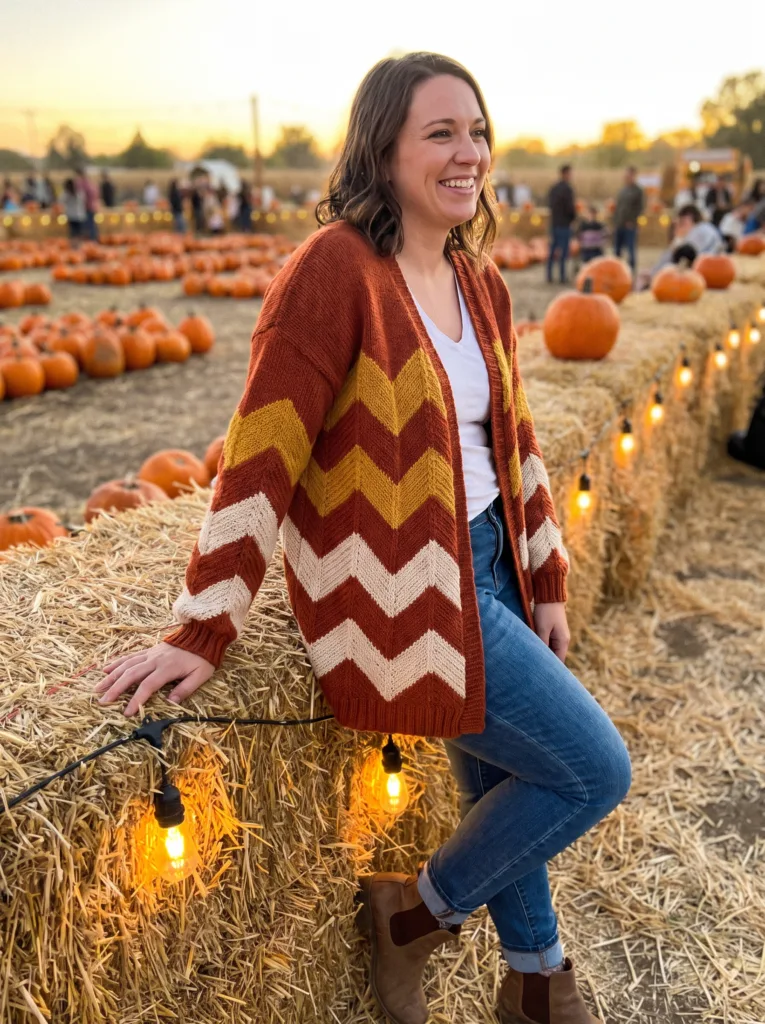
The chevron here is built using the same ripple stitch mechanics as the rainbow maxi dress from an earlier list, but worked in a warm three-color fall palette instead of pastels, which completely changes the mood of the same underlying technique.
The Ripple Chevron Body
The body is worked in classic ripple stitch — increase, decrease, increase along each row to form the zigzag — using rust, mustard, and cream worsted weight wool-acrylic in sequence, changing color every two rows with a 5mm hook throughout. The same ripple mechanics that created a soft pastel zigzag in a summer dress reads completely differently here, since the higher contrast between rust and cream makes the chevron pattern bolder and more graphically defined than a low-contrast pastel version would be.
The Sleeve & Cuff Treatment
The sleeves continue the same three-color chevron sequence as the body, worked in the round so the zigzag pattern wraps continuously around the arm rather than just appearing on a flat front panel, with a final cuff row finished in solid cream to bookend the pattern cleanly. This continuation of the chevron through the sleeves, rather than switching to a plain solid sleeve, is what makes the bold pattern feel considered and complete rather than confined only to the body panels.
Yarn Suggestions to Recreate This Chevron Cardigan:
- Color 1: Worsted wool-acrylic in rust — Lion Brand Heartland in Denali
- Color 2: Worsted wool-acrylic in mustard — We Crochet Wool of the Andes in Honey
- Color 3: Worsted wool-acrylic in cream — Caron Simply Soft in Off White
- Hook sizes: 5mm throughout
20. Crochet Hooded Duster Cardigan with Long Flowing Silhouette
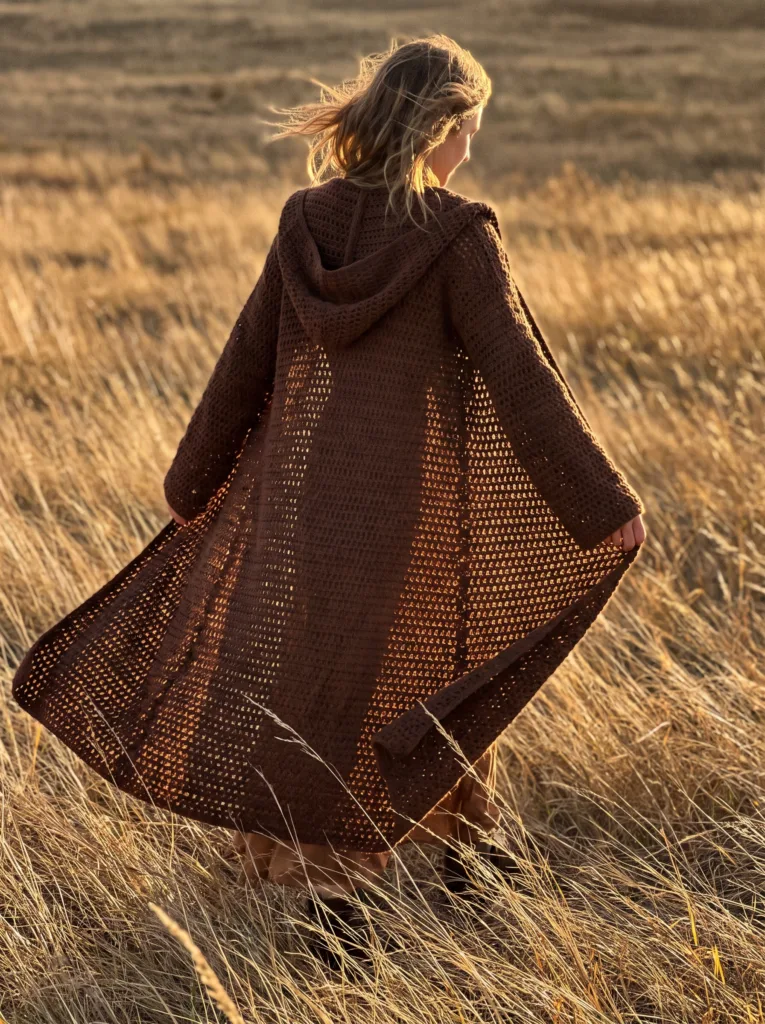
This is idea #20 — the hooded duster we mentioned all the way back in the introduction, and the cardigan our readers ask about more than any other piece on this list.
This is the longest, most dramatic silhouette in the entire collection, and the reason it earns that drama is the same bias-style construction principle from the waterfall cardigan, scaled up to a genuinely ankle-length garment.
The Ankle-Length Flowing Body
The body is worked top-down in solid double crochet using deep chocolate brown worsted weight wool-acrylic and a 5mm hook, with gradual width increases built into the side seams from underarm to hem that allow the fabric to flow and swing dramatically rather than hang in a straight column despite its considerable length. Reaching genuine ankle length requires significant yarn and time investment, but the resulting movement when walking — the fabric catching air and swaying with each step — is precisely what separates a duster silhouette from a simply long cardigan.
The Draped Hood
The hood is worked larger and looser than a standard fitted hood, designed to drape softly at the back of the neck even when not worn up, rather than sitting flat — this is achieved by adding extra width across the hood’s center back panel before the side seams are joined. This deliberately oversized, draping hood construction continues the same flowing, unstructured visual language as the rest of the duster, rather than introducing a tighter, more fitted element that would interrupt the garment’s overall sense of movement.
Yarn Suggestions to Recreate This Duster Cardigan:
- Body and hood: Worsted weight wool-acrylic in chocolate brown — We Crochet Wool of the Andes in Cocoa, or Lion Brand Heartland in Redwood
- Hook sizes: 5mm throughout
21. Crochet Minimalist Cardigan with Sleek Vertical Rib Lines
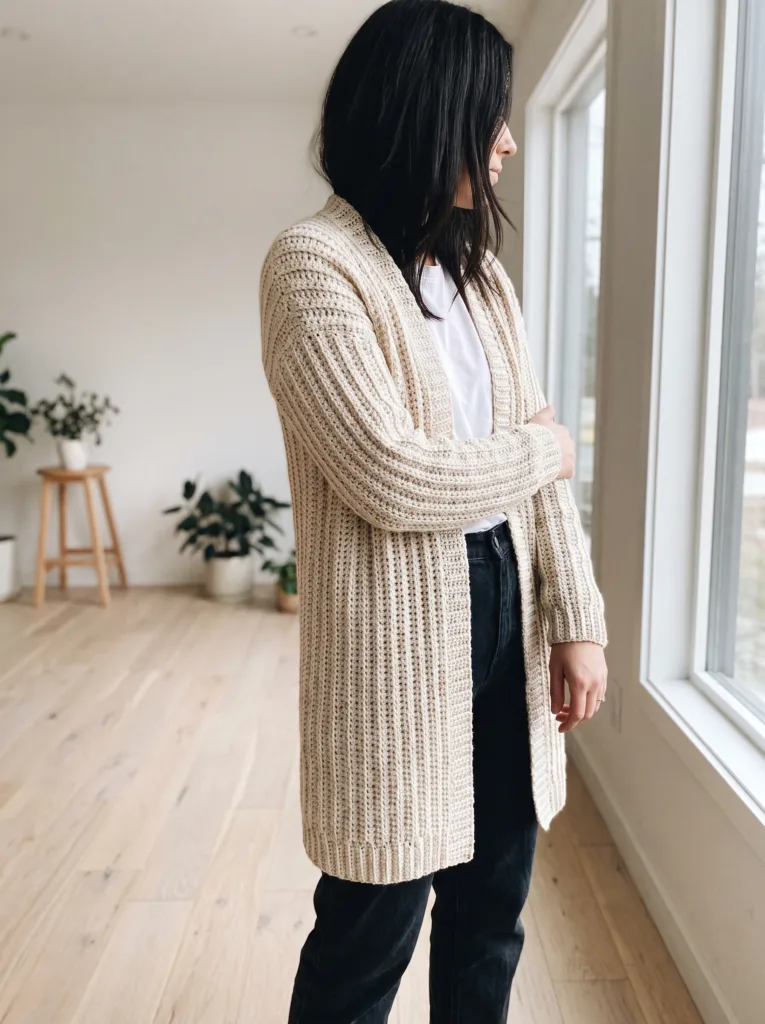
The final cardigan on this list closes things out the way idea #1 opened them — with pure stitch texture doing all the visual work — but here the rib lines are fine and continuous rather than deep and waffled, creating an entirely different, much quieter effect.
The Vertical Rib Body
The entire body is worked in alternating front-post and back-post double crochet, one stitch at a time, using oatmeal cream DK weight wool-cotton blend and a 4mm hook — a finer gauge than most other pieces on this list, which keeps the rib lines narrow, continuous, and genuinely sleek rather than chunky or pronounced. This fine, consistent ribbing running the entire length of the body, with no color changes, motifs, or texture variations to interrupt it, is what gives this cardigan its distinctly minimalist, almost architectural quality.
The Unembellished Finish
I deliberately left every edge — hem, cuffs, and front opening — finished simply with the natural rib pattern running straight to the edge, with no contrasting trim, no buttons, and no closure of any kind. This complete absence of embellishment is the actual design statement here; after twenty cardigans built around bold color, dramatic silhouette, or intricate texture, this final piece proves that stitch quality alone, with nothing else added, can carry an entire garment.
Yarn Suggestions to Recreate This Minimalist Cardigan:
- Body: DK weight wool-cotton blend in oatmeal cream — Drops Nepal in Off White, or Paintbox Yarns Wool Mix DK in Cream
- Hook sizes: 4mm throughout
Frequently Asked Questions
What is the warmest crochet stitch for a fall cardigan?
Dense, textured stitches trap the most warmth because they create air pockets between the yarn fibers. Alpine stitch, waffle stitch, and thermal stitch are the three warmest options on this list — each combines post stitches or layered loops to build genuine thickness rather than just visual texture. Plain double crochet at the same yarn weight will always be noticeably less warm than these textured alternatives, which is why so many fall-specific cardigan patterns lean on them deliberately.
What yarn weight is best for a crochet fall cardigan?
Worsted weight is the most versatile choice for fall cardigans — it balances warmth, drape, and reasonable working time better than any other weight. Chunky and super chunky weights, used in the alpine stitch and double-breasted designs on this list, create faster, exceptionally warm garments but use significantly more yarn and produce a heavier finished piece. DK weight, seen in the leaf lace and minimalist rib designs, suits more fitted, tailored silhouettes where drape matters more than maximum warmth.
How much yarn do I need for a crochet cardigan?
Most adult-sized cardigans in worsted weight wool-acrylic blend require between 1,000 and 1,600 grams of yarn, depending on size, length, and stitch density. Longer styles like the hooded duster or longline gradient cardigan need significantly more yarn than cropped designs like the moss stitch cardigan with balloon sleeves. Textured stitches that use more yarn per stitch — alpine stitch, thermal stitch, and waffle stitch — also increase total yardage needs compared to plain double crochet at the same dimensions, so always buy at least one extra skein.
Can crochet cardigans be made without a hood or closure?
Yes — several designs on this list, including the buttonless draped cardigan and the hooded duster’s open silhouette, are intentionally worn without any closure at all. An open-front cardigan relies on drape, proportion, and sometimes bias-style construction to hang well without buttons, ties, or belts. If you prefer a closure but the pattern you’re working from doesn’t include one, adding a simple tie, a single button at the collarbone, or a sewn-on belt loop are all easy modifications that don’t require changing the main body construction.
What is the easiest crochet cardigan style for a beginner to make?
Simple, solid-stitch silhouettes with minimal shaping are the best starting point — the moss stitch cropped cardigan and the colorblock cardigan on this list are both excellent first-garment projects because they use straightforward stitch repeats and clear, predictable construction. Avoid starting with anything involving bias-cut drape, fair isle colorwork, or asymmetrical hood shaping until you’ve completed at least one full-body garment, since those techniques require more confident tension control and pattern-reading experience.
Which One Is Your Favorite?
From the burnt orange waffle stitch oversized cardigan that opened this list to the minimalist vertical-rib cardigan that closed it, these 21 crochet cardigan ideas for fall prove that handmade layers can be genuinely warm, wearable, and worth showing off. Whether you’re drawn to the dramatic ankle-length flow of the hooded duster at #20 or the quiet confidence of the unembellished rib cardigan at #21, every silhouette here was built for real autumn weather, not just a photo.
Which cardigan are you making first? Tell us in the comments — and let us know if you land on the patchwork hexagon piece at #5 or the double-breasted chunky cardigan at #18, because that debate splits our readers every single time. If you make any of these, tag us — we want to see them styled with real boots and a real cup of cider.