
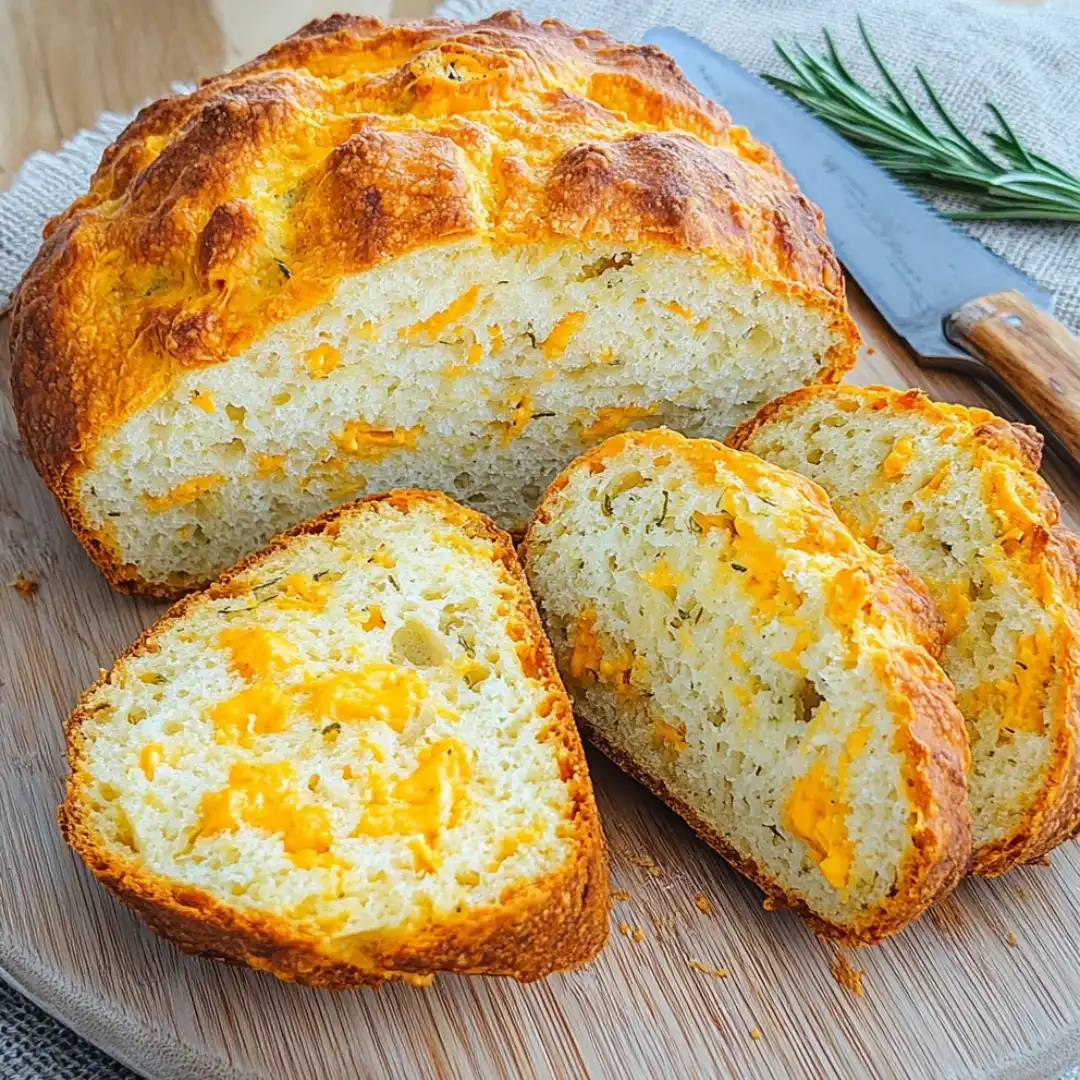
Few things rival the comfort of a warm, freshly baked loaf straight from the oven, and this Cheddar and Rosemary Irish Soda Bread takes that joy to new heights. This recipe transforms the classic Irish soda bread into a savory masterpiece, blending the tangy richness of cheddar cheese with the aromatic earthiness of rosemary. I first tasted a version of this bread at a cozy Irish pub during a rainy afternoon in Dublin, where a slice slathered with butter paired perfectly with a hearty bowl of stew. That memory inspired this recipe, which captures the essence of Irish tradition with a modern twist.
Ready in just 30 minutes, this Irish Soda Bread is a lifesaver for busy days or when you crave homemade bread without the fuss of yeast or long rising times. With only six ingredients and minimal effort, it’s perfect for both novice bakers and seasoned cooks. Whether you’re serving it for breakfast, as a side for dinner, or as a festive treat for St. Patrick’s Day, this loaf is sure to impress with its golden crust and cheesy, herb-infused interior. Let’s dive into baking this delightful bread!
Why You’ll Love This Recipe
-
Incredibly Quick: From mixing to baking, this bread is ready in 30 minutes, making it ideal for last-minute meals or spontaneous baking.
-
Savory and Flavorful: The combination of sharp cheddar and fragrant rosemary elevates the traditional soda bread to a gourmet level.
-
Versatile Serving Options: Enjoy it for breakfast with butter, as a side with soups or stews, or as a base for sandwiches.
-
Customizable: Swap flours, cheeses, or herbs to suit your taste, or add a cheesy crust for extra indulgence.
-
No Yeast, No Fuss: Baking soda provides the lift, eliminating the need for kneading or rising, perfect for beginners.
Ingredients
-
2 cups all-purpose flour: The foundation of the bread, providing structure. Opt for unbleached flour for a slightly nuttier flavor.
-
1 teaspoon baking soda: Acts as the leavening agent, reacting with buttermilk to create a quick rise without yeast.
-
1/2 teaspoon salt: Enhances the flavors and balances the richness of the cheese.
-
1 cup buttermilk: Adds moisture and a subtle tang, contributing to the bread’s tender crumb. If unavailable, mix 1 tablespoon lemon juice or white vinegar with 1 cup milk and let sit for 5 minutes.
-
2 cups cheddar cheese, shredded or diced: Brings a rich, savory depth. Sharp or aged cheddar offers the boldest flavor; shred fresh for better melting.
-
2 tablespoons rosemary, chopped: Provides an aromatic, herbal note that complements the cheese. Fresh rosemary is preferred, but dried can be used (reduce to 1 tablespoon).
Tip: Use freshly shredded cheddar rather than pre-shredded, as it melts more evenly and avoids additives that can affect texture, per Serious Eats.
Equipment Needed
-
Large mixing bowl
-
Baking sheet or cast-iron skillet
-
Parchment paper (optional, for easier cleanup)
-
Measuring cups and spoons
-
Sharp knife for chopping rosemary
-
Wire rack for cooling
-
Oven mitts
How to Make Cheddar and Rosemary Irish Soda Bread
Step 1: Preheat the Oven
Preheat your oven to 425°F (220°C). If using a baking stone or cast-iron skillet, place it in the oven to heat, ensuring a crisp bottom crust.
Step 2: Combine Dry Ingredients
In a large mixing bowl, whisk together 2 cups all-purpose flour, 1 teaspoon baking soda, and 1/2 teaspoon salt. This ensures the baking soda is evenly distributed for consistent rising.
Step 3: Add Wet Ingredients
Pour 1 cup buttermilk into the dry ingredients and mix with a wooden spoon or your hands until just combined. The dough will be sticky and shaggy—avoid overmixing to keep the bread tender.
Step 4: Incorporate Cheese and Rosemary
Fold in 2 cups shredded or diced cheddar cheese and 2 tablespoons chopped rosemary, mixing until evenly distributed. The cheese adds gooey pockets, while rosemary infuses the dough with flavor.
Step 5: Shape the Loaf
Turn the dough onto a lightly floured surface and gently knead 3-4 times to form a cohesive ball. Shape into a round loaf, about 6-7 inches in diameter. Avoid over-kneading to maintain a light texture.
Step 6: Bake
Place the loaf on a parchment-lined baking sheet or preheated baking stone/cast-iron skillet. Optionally, score a shallow “X” on top to help it expand. Bake for 20-30 minutes, until the top is golden brown and the bread sounds hollow when tapped on the bottom.
Step 7: Cool and Serve
Transfer the bread to a wire rack and cool for at least 10 minutes before slicing. This allows the crumb to set, making it easier to cut. Serve warm for the best flavor.
Tips and Variations
Tips for Success
-
Buttermilk Substitute: If you don’t have buttermilk, create a substitute by mixing 1 tablespoon lemon juice or vinegar with 1 cup milk, letting it sit for 5 minutes.
-
Don’t Overmix: Mix the dough just until combined to avoid a dense loaf. The shaggy texture is normal for soda bread.
-
Check Doneness: Tap the bottom of the loaf; a hollow sound indicates it’s fully baked. A toothpick inserted in the center should come out clean.
-
Cheese Selection: Use sharp cheddar for bold flavor, and shred it yourself to avoid anti-caking agents in pre-shredded cheese.
-
Rosemary Prep: Chop fresh rosemary finely to distribute flavor evenly. If using dried, reduce to 1 tablespoon to prevent overpowering the bread.
Variations
-
Whole Wheat Option: Replace up to 1 cup of all-purpose flour with whole wheat flour for a nuttier, heartier loaf.
-
Cheese Swap: Try Dubliner, Gouda, or Parmesan for different flavor profiles.
-
Herb Alternatives: Substitute rosemary with thyme, sage, or a mix of Italian herbs for a varied taste.
-
Extra Cheesy Crust: Sprinkle 1/4 cup extra shredded cheddar on top before baking for a golden, cheesy crust.
-
Add-Ins: Incorporate 1/4 cup chopped walnuts, pecans, or sun-dried tomatoes for added texture and flavor.
-
Gluten-Free: Use a 1:1 gluten-free flour blend with xanthan gum, though texture may vary slightly.
Storage and Make-Ahead
-
Storage: Store cooled bread in an airtight container or wrapped in plastic at room temperature for up to 3 days. For longer storage, wrap tightly and refrigerate for up to 5 days, though this may slightly dry the bread.
-
Freezing: Wrap the cooled loaf or slices in plastic wrap and place in a freezer-safe bag for up to 1 month. Thaw at room temperature or warm in a 300°F (150°C) oven for 5-10 minutes.
-
Make-Ahead: Prepare the dough up to 24 hours in advance, cover, and refrigerate. Shape and bake when ready, noting that chilling may enhance flavor.
Serving Suggestions
-
Breakfast: Serve warm with butter and jam, or pair with scrambled eggs and bacon for a hearty start to the day.
-
Lunch or Dinner: Accompany with soups like potato leek or beef stew, or serve alongside chili for a comforting meal.
-
Snacks: Slice and serve with cheese platters, featuring soft cheeses like brie or hard cheeses like aged gouda.
-
Brunch: Toast slices and top with avocado, smoked salmon, or poached eggs for an elegant brunch dish.
-
Holiday Feasts: Perfect for St. Patrick’s Day celebrations, paired with corned beef and cabbage or Irish stew.
The Story Behind Irish Soda Bread
Irish Soda Bread has a storied history, emerging in Ireland during the 19th century when baking soda became widely available. Unlike yeast breads, which required time and resources for fermentation, soda bread relied on the chemical reaction between baking soda and acidic buttermilk to rise quickly, making it a practical choice for households with limited means. Traditionally baked in a cast-iron pot over an open fire, it was a staple during times of scarcity, such as the Great Famine, due to its simplicity and affordability.
The classic recipe consists of flour, baking soda, salt, and buttermilk, often shaped into a round loaf with a cross scored on top—some say to ward off evil spirits, others to ensure even baking. Over time, variations like this cheddar and rosemary version have emerged, adding modern flavors while preserving the bread’s rustic charm. This recipe celebrates that heritage, offering a quick, flavorful loaf that’s perfect for everyday meals or festive occasions like St. Patrick’s Day.
Frequently Asked Questions
Can I use regular milk instead of buttermilk in Irish Soda Bread?
Yes, create a buttermilk substitute by mixing 1 tablespoon lemon juice or white vinegar with 1 cup milk, letting it sit for 5 minutes until curdled.
What makes Irish Soda Bread different from other breads?
Irish Soda Bread uses baking soda instead of yeast for leavening, requiring no kneading or rising time, making it quicker to prepare. Its dense, rustic texture and simple ingredients set it apart.
Can I make Irish Soda Bread gluten-free?
Yes, substitute all-purpose flour with a 1:1 gluten-free flour blend containing xanthan gum. The texture may be slightly denser, but it will still be delicious.
How long does Irish Soda Bread last?
Store at room temperature in an airtight container for up to 3 days or refrigerate for up to 5 days. Freeze for up to 1 month, thawing at room temperature.
Can I add other ingredients to Irish Soda Bread?
Yes, incorporate nuts, seeds, dried fruits, or different cheeses. This recipe uses cheddar and rosemary, but raisins, caraway seeds, or walnuts are traditional add-ins.
Why does my Irish Soda Bread turn out dense?
Overmixing or using too much flour can make the bread dense. Mix just until combined, and measure flour accurately by spooning and leveling.
Conclusion
This Cheddar and Rosemary Irish Soda Bread is a quick, flavorful twist on a classic Irish recipe, perfect for any occasion. With its cheesy, herb-infused crumb and golden crust, it’s a versatile loaf that’s as easy to make as it is delicious. Whether you’re a seasoned baker or a beginner, this recipe will bring warmth and comfort to your table. Bake it, share your creations in the comments, and PIN THIS RECIPE for your next baking adventure!
PrintCheddar and Rosemary Irish Soda Bread

A super simple Irish style soda bread with plenty of cheddar cheese and rosemary where you literally just need to mix 6 simple ingredients, form a loaf with the dough and bake it!
- Prep Time: 10 minutes
- Cook Time: 20 minutes
- Total Time: 30 minutes
- Yield: 10 1x
- Category: Bread
- Method: Baked
- Cuisine: Irish
- Diet: Vegetarian
Ingredients
- 2 cups all-purpose flour
- 1 teaspoon baking soda
- 1/2 teaspoon salt
- 1 cup buttermilk
- 2 cups cheddar cheese, shredded or diced
- 2 tablespoons rosemary, chopped
Instructions
- Preheat oven to 425°F (220°C).
- In a large bowl, whisk flour, baking soda, and salt.
- Add buttermilk and mix until just combined.
- Fold in cheddar cheese and rosemary.
- Turn dough onto a floured surface, knead lightly, and shape into a 6-7 inch round loaf.
- Place on a parchment-lined baking sheet or preheated baking stone.
- Bake for 20-30 minutes until golden brown and hollow-sounding when tapped.
- Cool on a wire rack for 10 minutes before slicing.
Notes
- Replace up to 1 cup all-purpose flour with whole wheat flour for a nuttier flavor.
- Sprinkle extra cheese on top before baking for a cheesy crust.
- Store at room temperature for 3 days, refrigerate for 5 days, or freeze for 1 month.
- Perfect for St. Patrick’s Day or any cozy meal!
Allergy Information: Contains dairy (cheddar cheese, buttermilk) and gluten (flour). Verify ingredients for specific allergies.
Nutrition
- Serving Size: 1 slice
- Calories: 200kcal
- Sugar: 1g
- Sodium: 140mg
- Fat: 8g
- Saturated Fat: 5g
- Trans Fat: 0g
- Carbohydrates: 21g
- Fiber: 1g
- Protein: 9g
- Cholesterol: 25mg