
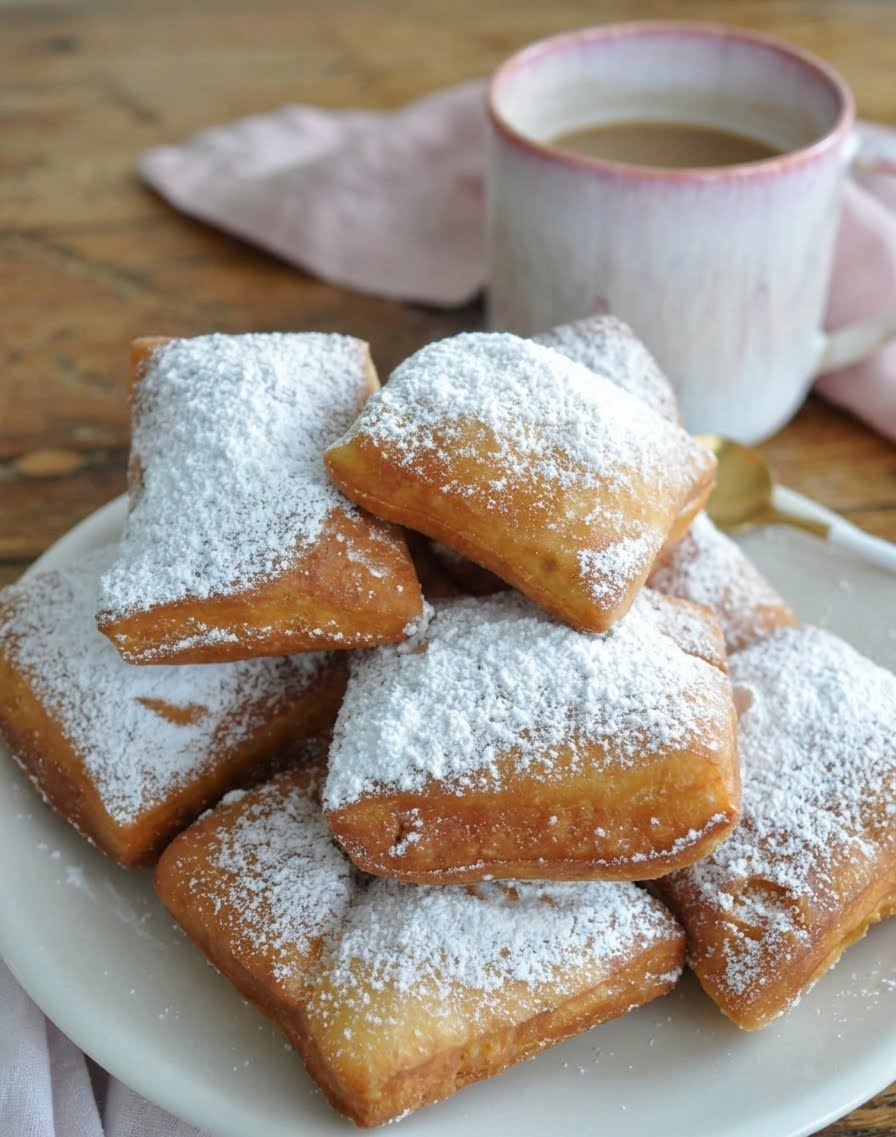
This best beignets recipe brings that iconic fluffy, pillowy, powdered-sugar-dusted magic straight into your home kitchen — no trip to New Orleans required. If you’ve ever bitten into a warm beignet at a classic café, you know that moment: the crispy golden outside gives way to a soft, airy inside, and the cloud of powdered sugar that rises with every bite is pure joy. That experience is exactly what this recipe delivers, and it’s much easier to recreate at home than you might think.
Beignets are a beloved New Orleans tradition — square pieces of yeasted dough, fried until golden and puffed, then buried under a generous snowfall of powdered sugar. They’re served fresh and warm, best enjoyed immediately with a cup of coffee or hot chocolate on the side. The texture is somewhere between a donut and a churro — light, fluffy, slightly chewy, and completely irresistible.
What makes this recipe work so well is the chilled dough. After mixing — whether in a bread machine, stand mixer, or by hand — the dough rests in the fridge for 3 to 4 hours. This slow chill develops flavor, makes the dough easy to roll and cut, and gives the beignets that signature airy lift when they hit the hot oil. The result is a batch of 24 perfectly fluffy squares that puff up beautifully and turn golden in just minutes.
The ingredient list is simple — warm water, sugar, egg, butter, evaporated milk, flour, yeast, and powdered sugar. Nothing fancy, nothing hard to find. Just honest, pantry-friendly ingredients that come together into something truly special.
Whether you’re making these for a weekend breakfast treat, a holiday dessert spread, or just because you deserve something wonderful today, this beignets recipe will not let you down. Once you make them at home, the café version will feel unnecessary.
Ready to fill your kitchen with that warm, sugary, fried-dough magic? Let’s make beignets.
PrintBeignets Recipe
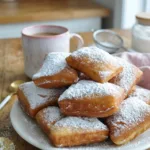
The Best Beignets Recipe Sweet, fluffy, powdered sugar-covered homemade beignets — a classic New Orleans treat made easy in your own kitchen.
- Prep Time: 20 minutes
- Additional Time: 4 hours
- Cook Time: 20 minutes
- Total Time: 4 hours 40 minutes
- Yield: 24 beignets 1x
- Category: Dessert
- Cuisine: American
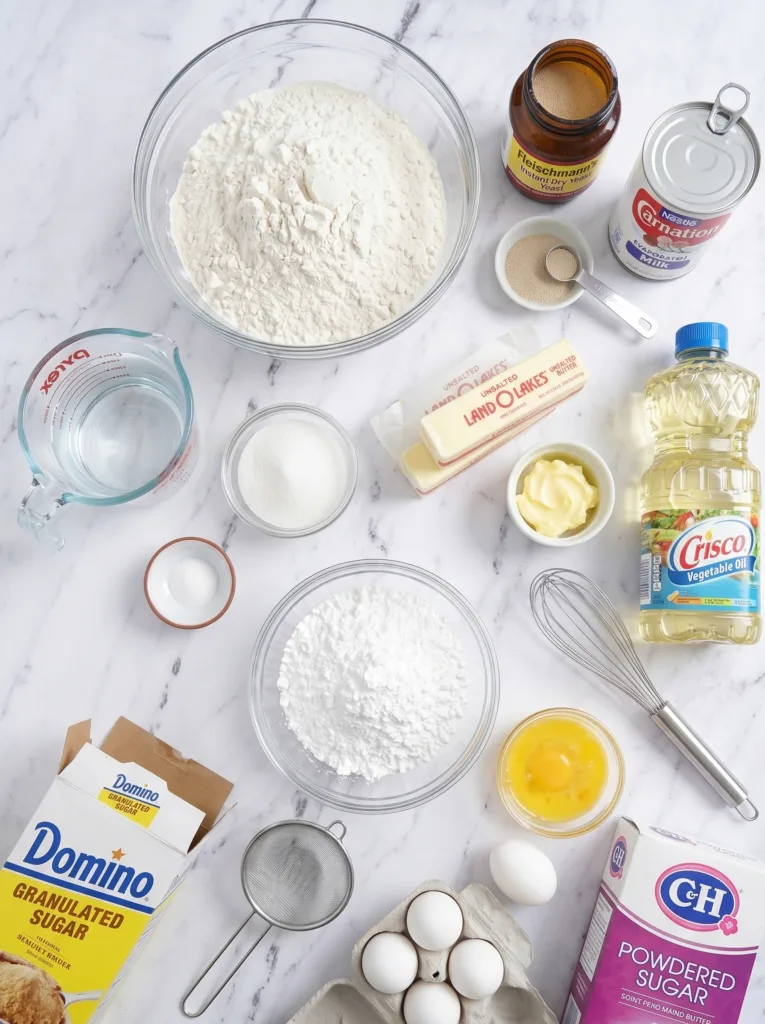
Ingredients
- 1 cup warm water
- ¼ cup sugar
- ½ teaspoon salt
- 1 egg, beaten
- 2 tablespoons butter
- ½ cup evaporated milk
- 4 cups all-purpose flour
- 3 teaspoons instant active dry yeast
- Oil for frying
- 1 cup powdered sugar
Instructions
- Bread machine method: Layer water, sugar, salt, egg, butter, and evaporated milk in the pan without stirring. Add flour, then yeast on top. Set to dough cycle and start. Stand mixer method: Combine all ingredients with dough hook on medium speed for 8–10 minutes until smooth. Transfer finished dough to a well-oiled bowl, cover tightly with plastic wrap, and refrigerate for 3–4 hours.
- Roll chilled dough on a floured surface to ½ inch thickness. Cut into 3-inch squares using a sharp knife or pizza cutter.
- Heat several inches of neutral oil in a deep pot to 365°F (185°C). Fry 4–5 beignets at a time for 2–3 minutes per side until golden brown. Flip carefully with tongs. Check oil temperature between batches.
- Drain on paper towels or a wire rack. Dust generously with powdered sugar while still warm. Serve immediately.
Notes
- Unfried dough keeps refrigerated for up to one week — fry fresh as needed.
- Always use a thermometer to maintain 365°F (185°C) oil temperature.
- Fry in small batches of 4–5 only — overcrowding drops oil temperature.
- Best served warm and fresh the same day they are fried.
- Dust with powdered sugar while warm for best coverage and flavor.
Nutrition
- Serving Size: 3–4 Beignets per person
- Calories: 123 kcal
- Sugar: 8 g
- Sodium: 65 mg
- Saturated Fat: 1 g
- Carbohydrates: 24 g
- Fiber: 1 g
- Protein: 3 g
- Cholesterol: 11 mg
Why You’ll Love This Beignets Recipe
- Perfectly fluffy texture — light, airy, and golden every time thanks to the yeasted dough and proper fry temperature.
- Simple pantry ingredients — nothing exotic or hard to find; everything is probably already in your kitchen.
- Make-ahead dough — mix it the night before, chill overnight, and fry fresh in the morning with almost zero effort.
- Makes 24 beignets — a generous crowd-pleasing batch perfect for sharing at brunches, parties, or holiday mornings.
- Fun to make — rolling, cutting, and watching them puff up in the oil is genuinely satisfying and great to do with kids.
- Iconic powdered sugar finish — that generous dusting while warm is non-negotiable and makes every bite feel indulgent.
- Better than café — fresh from your own kitchen, hot and just-fried, these beat anything that’s been sitting under a heat lamp.
Ingredients for Beignets
Every ingredient in this recipe plays a specific role in creating that signature fluffy, golden, melt-in-your-mouth result.
Key Ingredients Overview
The base of the dough starts with warm water — not hot, not cold. Warm water activates the yeast properly and gets the dough rising beautifully. Speaking of yeast, instant active dry yeast is what gives beignets their signature puffed, airy lift when they hit the hot oil. Without properly activated yeast, you end up with dense, flat squares instead of pillowy clouds.
Evaporated milk is the secret to that slightly rich, tender crumb that sets beignets apart from regular fried dough. It adds creaminess and depth without making the dough heavy. Combined with butter and a beaten egg, it creates a soft, workable dough with just enough richness to fry up golden and gorgeous.
All-purpose flour gives the dough its structure — enough to hold its shape when cut into squares but light enough to puff dramatically in hot oil. A small amount of sugar feeds the yeast and adds subtle sweetness to the dough itself, while salt balances everything and enhances flavor.
Finally, the finish: powdered sugar. Dusted generously over warm beignets straight from the fryer, it melts slightly on contact and creates that iconic sweet, snowy coating that makes every bite feel like a celebration.
Ingredient Notes & Substitutions
- Evaporated milk — If you don’t have it, substitute with half-and-half or whole milk. The texture will be slightly less rich but still delicious.
- Bread machine vs stand mixer vs by hand — All three methods work. A bread machine on the dough cycle is the easiest hands-off option. A stand mixer with a dough hook takes about 8–10 minutes. By hand, knead on a floured surface for 10–12 minutes until smooth and elastic.
- Oil for frying — Use a neutral oil with a high smoke point: vegetable, canola, or sunflower oil all work perfectly. Avoid olive oil — it burns too easily at frying temperatures.
- Gluten-free option — A 1:1 gluten-free all-purpose flour blend can work but the texture will be slightly denser. Results vary by brand so choose one specifically designed for yeasted doughs.
- Powdered sugar — Don’t skip or reduce this. It’s what makes a beignet a beignet. Dust while warm so it sticks and melts slightly into the surface.
Recipe Success Tips
These tips are the difference between good beignets and absolutely perfect ones:
- Maintain oil temperature at 365°F (185°C) — This is the most critical step. Too hot and the outside browns before the inside cooks through. Too cool and they absorb excess oil and turn greasy. Use a thermometer — don’t guess.
- Chill the dough fully — Don’t rush the 3–4 hour refrigeration. The cold rest develops flavor, firms up the dough for easy rolling and cutting, and gives the beignets better structure when frying.
- Fry in small batches — Add only 4–5 beignets at a time. Overcrowding drops the oil temperature rapidly, leading to uneven cooking and greasy results.
- Don’t walk away from the fryer — Beignets fry quickly — just 2–3 minutes per side. Stay close, watch for that golden color, and flip with tongs as soon as they’re ready.
- Dust with powdered sugar while still warm — The warmth helps the sugar adhere and melt slightly into the surface. Cold beignets don’t hold the sugar as well and lose that iconic look and taste.
- Use a thermometer for the oil — Even if you think the oil looks ready, always verify with a thermometer. Consistent temperature = consistent results across every batch.
- Store unfried dough in the fridge — The raw dough keeps refrigerated for up to one week. This means you can mix once and fry fresh small batches whenever you want — perfect for planning ahead without sacrificing freshness.
How to Make Beignets Step-by-Step
Making beignets at home is a rewarding process — most of the time is hands-off chilling, and the actual frying takes just minutes. Follow these steps carefully and you’ll have a beautiful batch of fluffy, golden, sugar-dusted beignets that taste like they came straight from a New Orleans café.
Make and Chill the Dough
This is where the magic starts — and the good news is it requires very little active effort.
If using a bread machine: Layer the ingredients in this exact order without stirring — warm water first, then sugar, salt, beaten egg, butter, and evaporated milk. Add the flour on top, then make a small well in the center and add the yeast last so it doesn’t touch the liquid yet. Set your machine to the dough cycle and press start. The machine does all the work from here.
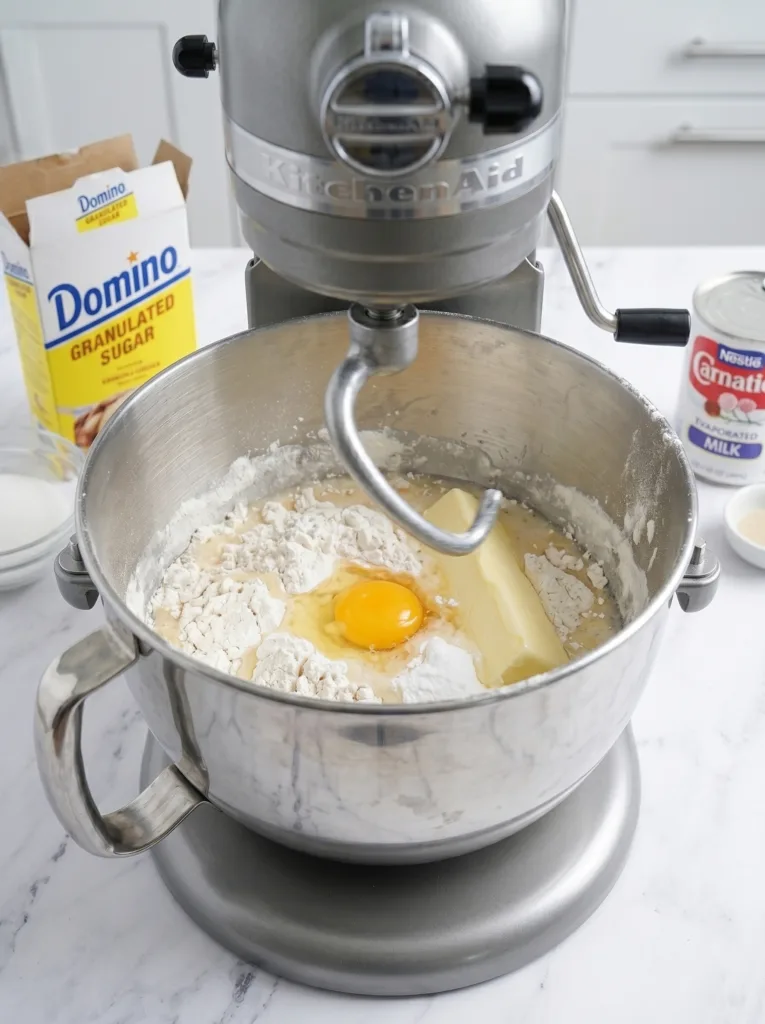
If using a stand mixer: Add all the ingredients to the bowl with the dough hook attached — water, sugar, salt, egg, butter, evaporated milk, flour, and yeast. Mix on medium speed for 8–10 minutes until the dough is smooth, slightly tacky, and pulls away cleanly from the sides of the bowl.
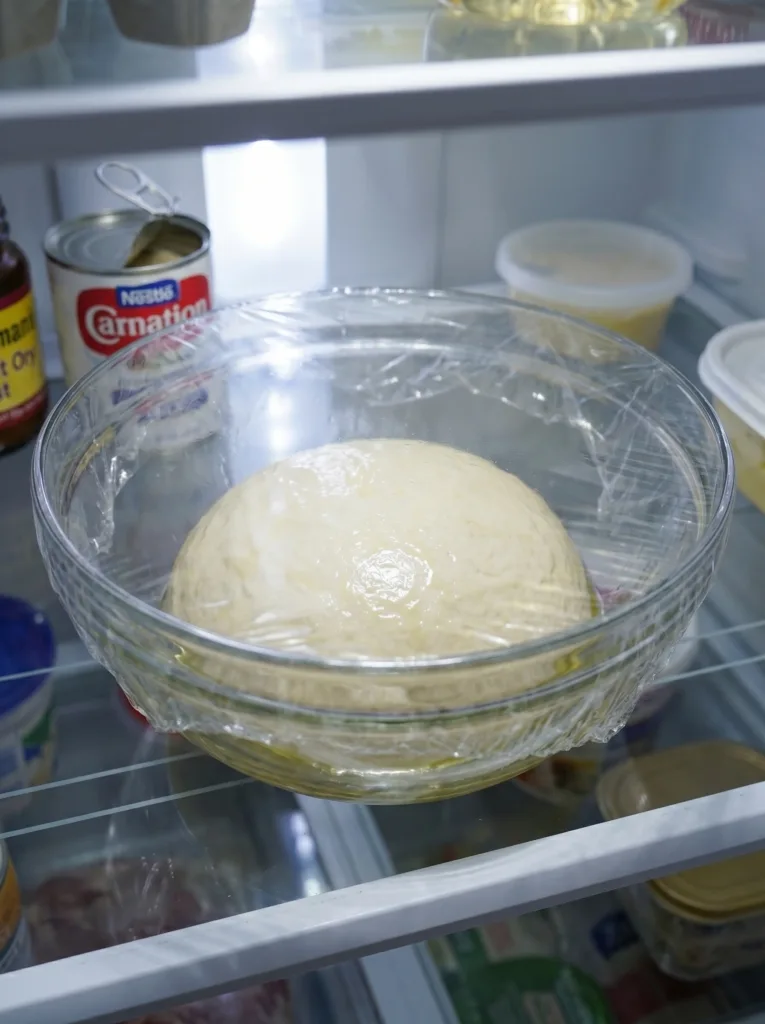
Once the dough is ready, transfer it to a well-oiled bowl and turn it once to coat all sides. Cover tightly with plastic wrap — no gaps, no air getting in. Place the bowl in the refrigerator and chill for a minimum of 3–4 hours, or overnight for even better flavor development. The cold rest is not optional — it firms up the dough, develops the flavor, and makes rolling and cutting much easier.
Roll and Cut the Beignets
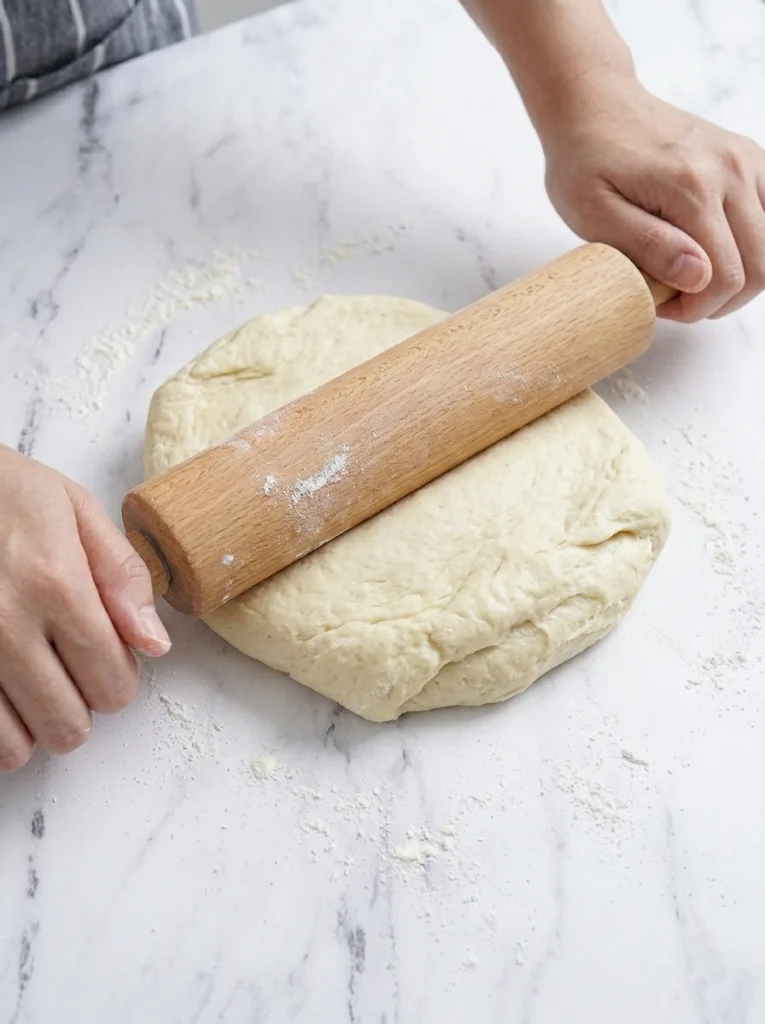
Once the dough has chilled and rested, it’s time to shape your beignets. Lightly flour a clean work surface and turn the chilled dough out onto it. Using a rolling pin, roll the dough out evenly to about ½ inch thickness — not too thin or the beignets won’t puff properly, not too thick or the inside won’t cook through before the outside browns.
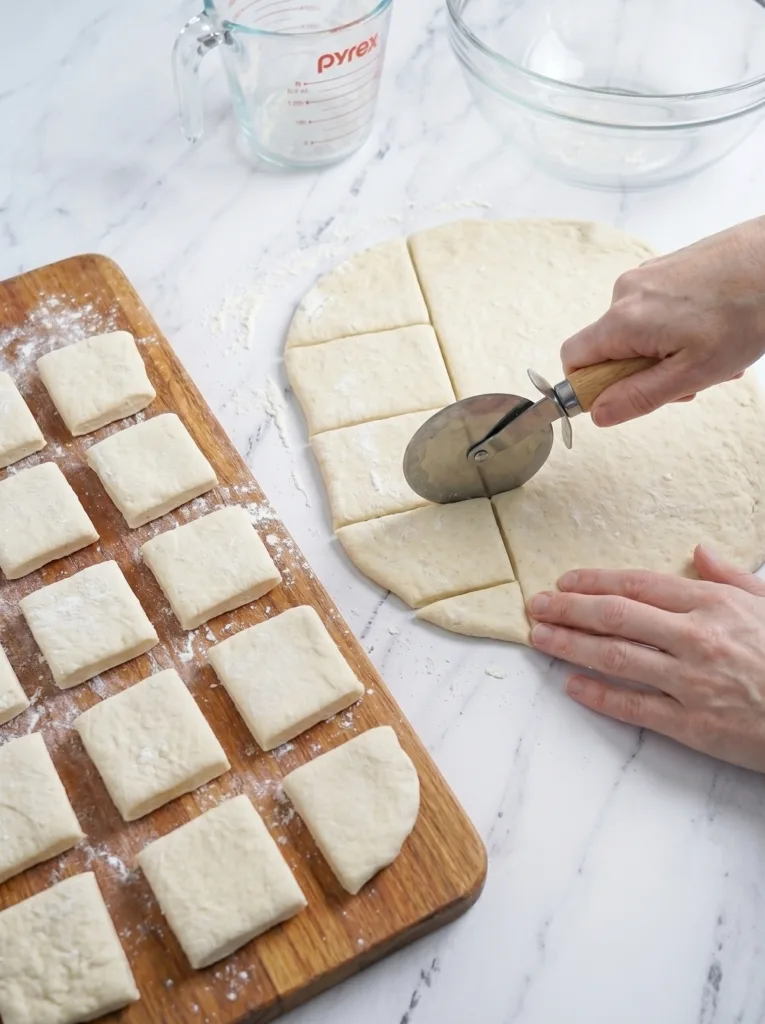
Using a sharp knife or pizza cutter, cut the dough into 3-inch squares. Try to keep the cuts clean and even — uniform squares cook at the same rate and give you consistent results across the whole batch. You should get approximately 24 squares from this dough.
As you cut, set the squares aside on a lightly floured tray or board. Don’t stack them — they’ll stick together. If your kitchen is warm, keep them cool while you heat the oil.
Fry to Golden Perfection
This is the most important and most satisfying step — watch these little squares transform into puffy, golden pillows right before your eyes.
Pour several inches of neutral oil into a deep, heavy-bottomed pot or deep fryer. Heat the oil to exactly 365°F (185°C) — use a thermometer to verify the temperature before adding any dough. This specific temperature is critical: too hot and the outside darkens before the inside cooks; too cool and the beignets absorb excess oil and turn heavy and greasy.
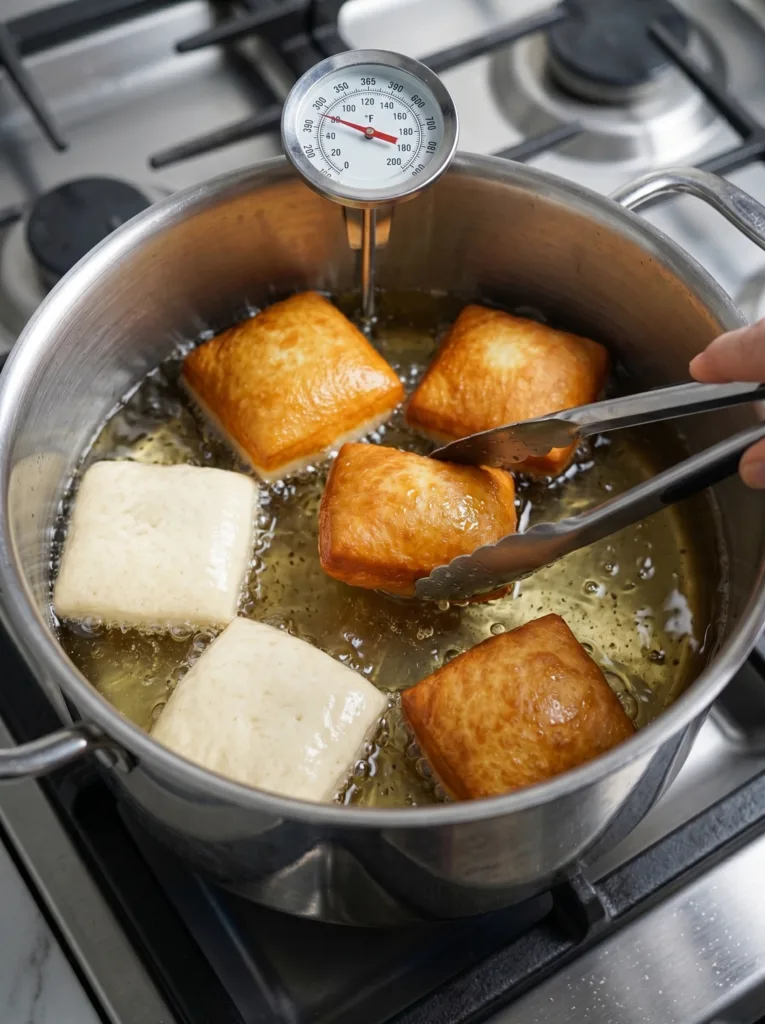
Once the oil is at temperature, gently lower 4–5 beignet squares in at a time — no more. Overcrowding drops the oil temperature immediately and leads to uneven, soggy results. The dough squares will sink briefly then begin to puff and rise to the surface as they cook. Allow them to fry for about 2–3 minutes per side, watching closely for that deep golden brown color. Use tongs or a slotted spoon to flip them carefully — they’re delicate when hot.
Between batches, always check the oil temperature and allow it to return to 365°F (185°C) before adding the next batch. This consistency is what gives every beignet that same perfect golden result.
Dust with Powdered Sugar and Serve
The final step is the most iconic — and the most fun.
While the beignets are still warm — straight from draining on the paper towels — dust them immediately and generously with powdered sugar. Use a fine mesh sieve or sifter for an even, beautiful coating, or simply spoon the sugar over and let it fall like snow. The warmth of the beignets helps the sugar adhere and melt slightly into the surface, creating that signature sweet crust that makes every bite so memorable.
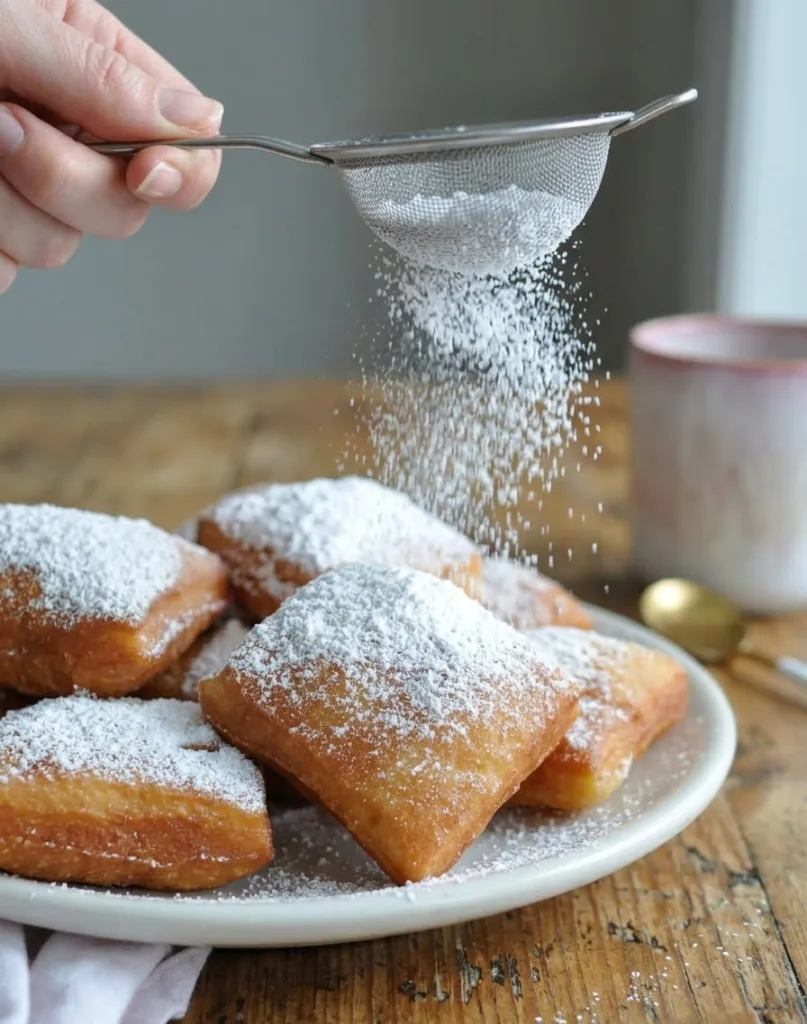
Don’t be shy with the sugar. Beignets are meant to be gloriously, unapologetically covered. That puff of white cloud when you pick one up is part of the whole experience.
Serve immediately — beignets are at their absolute best warm and fresh, within minutes of frying. They soften as they sit and are best enjoyed the same day they’re made. Set them on a plate, pour the coffee, and enjoy every single powdery, pillowy bite.
Flavor Variations
Once you master the base recipe, try these fun twists:
- Chocolate dipping sauce — Melt dark chocolate with a splash of heavy cream for a rich dipping sauce alongside the powdered sugar.
- Cinnamon sugar coating — Swap powdered sugar for a mix of 1 cup sugar and 2 teaspoons cinnamon for a churro-inspired finish.
- Filled beignets — After frying, pipe jam, Nutella, or pastry cream inside using a piping bag for a surprise center.
- Mini beignets — Cut the dough into smaller 1.5-inch squares for bite-sized party versions that fry in just 1–2 minutes per side.
- Flavored sugar — Mix powdered sugar with a pinch of cardamom or vanilla powder for a subtle aromatic twist.
Serving Suggestions
- Café-style — Serve warm alongside a strong coffee, café au lait, or hot chocolate for the full New Orleans experience.
- Dipping sauces — Set out chocolate sauce, caramel, or berry jam for guests to dip and customize.
- Party dessert platter — Pile them high on a platter dusted with extra powdered sugar for a stunning, crowd-pleasing centerpiece.
- Weekend breakfast treat — Serve with fresh fruit on the side for a balanced and indulgent morning spread.
Storage Instructions
Unfried dough keeps refrigerated in a covered bowl for up to one week — fry fresh batches as needed for best results.
Fried beignets are best enjoyed the same day, ideally within an hour of frying. They soften quickly as they sit and don’t store well once fried.
To reheat: Warm leftover fried beignets in the oven at 175°C (350°F) for 4–5 minutes and re-dust with fresh powdered sugar before serving.
Food safety note: Keep unfried dough tightly covered and refrigerated at all times. Never leave fried beignets at room temperature for more than 2 hours.
FAQ About Beignets
Can I make beignets without a bread machine?
Absolutely. A stand mixer with a dough hook works perfectly — mix all ingredients and knead on medium speed for 8–10 minutes until smooth and elastic. You can also make the dough entirely by hand on a floured surface, kneading for 10–12 minutes. The bread machine just makes it more hands-off and convenient, but the result is the same with any method.
Why did my beignets turn out dense instead of fluffy?
The most common reason is inactive yeast. Make sure your water is warm — around 110°F (43°C) — not hot, which kills yeast, and not cold, which won’t activate it. Also make sure you chilled the dough for the full 3–4 hours and that your oil was at the correct temperature before frying. Under-proofed dough and incorrect oil temperature are the two biggest culprits behind dense beignets.
How important is the oil temperature?
Extremely important — it’s the single most critical factor in this recipe. At 365°F (185°C) the beignets puff, cook through, and turn golden perfectly. Too hot and the outside burns before the inside is done. Too cool and they absorb excess oil and turn heavy and greasy. Always use a thermometer and check between every batch.
Can I make beignets ahead of time?
Yes — the dough is ideal for making ahead. Mix the dough, refrigerate it for up to one week, and fry fresh batches as needed. This is actually the best approach since fried beignets don’t store well and are always best served warm and fresh right after frying.
Can I freeze the beignet dough?
Yes. After mixing, portion the dough into a freezer-safe bag and freeze for up to one month. Thaw overnight in the refrigerator before rolling and frying. Do not freeze already-fried beignets — the texture becomes soft and soggy after thawing.
Can I make gluten-free beignets?
You can try using a 1:1 gluten-free all-purpose flour blend designed for yeasted doughs. Results vary by brand and the texture will be slightly denser than the original. Make sure all other ingredients — including your yeast — are certified gluten-free if needed.
What is the difference between beignets and donuts?
Both are fried dough, but beignets are square, made from a yeasted dough, and always finished with powdered sugar — no glazing or filling required. Donuts are typically round with a hole, can be yeast-based or cake-based, and come in many flavor variations. Beignets have a lighter, airier texture and a distinctly French-Creole heritage rooted in New Orleans café culture.
Final Thoughts
These homemade beignets bring that iconic New Orleans café magic straight to your kitchen table — fluffy, golden, and buried in powdered sugar the way they were always meant to be. Make a batch for your next weekend breakfast, holiday morning, or any time you want to treat your people to something truly special. When you do, tag @savorgastronomy with your powdery, golden results — I want to see every single one!